

Learning how to verify makeup brush factory certifications helps importers reduce compliance risks and avoid costly sourcing mistakes. Before analyzing the compliance gap between baseline ISO 9001 and non-negotiable REACH or MoCRA regulations, you can review our benchmark Certified Makeup Brush Collection to see the structural and safety standards required by global brands.
This guide provides a professional verification framework. We analyze the line between baseline operational certificates (like ISO 9001) and non-negotiable market-access regulations (like REACH or MoCRA), helping buyers identify documentation issues before they affect production, customs clearance, or sales channels.
Why Importers Need a Structured Checklist, Not Gut Instinct
Skipping one verification step creates a compounding domino effect of costs. A checklist enforces strict compliance; gut instinct invites regulatory disaster.
| Risk Category & Compounding Financial Impact |
|---|
| Direct Asset Loss: Immediate cargo seizure, total shipment loss, or outright retailer rejection driven by missing or non-compliant market-access documentation. |
| Operational Drainage: Batch-wide defects (e.g., severe bristle shedding, unstable ferrule crimping), cascading into high return rates and prohibitive post-delivery rework expenses. |
| Regulatory Liabilities: Severe legal penalties, punitive fines, mandatory market withdrawals, and consumer liability litigation stemming from toxic or unauthorized raw materials. |
| Channel Penalties: Destructive commercial chargebacks from tier-1 retailers and permanent listing suspensions across major e-commerce marketplaces. |
| Brand Equity Erosion: Viral negative reviews and irreversible damage to brand reputation, completely freezing future retail scaling and market expansion opportunities. |
Business Legitimacy Verification
Verifying a supplier means auditing their business scope to prove they actually manufacture—not just trade—and confirming their legitimate export infrastructure.
| Corporate Capacity & Regulatory Scope | Export Infrastructure & Market Competence |
|---|---|
| 1. Entity Alignment Cross-verify business license, facility address, and manufacturing ownership across all logs to eliminate intermediary risks. | 1. Export Authority Validate either a direct independent export license or a transparent, certified customs broker partnership. |
| 2. Business Scope & Reality Ensure scope covers manufacturing (e.g., daily necessities, plastic products, or cosmetics/accessories). Pure trading portfolios indicate brokers. | 2. Shipment History Verify continuous B2B customs records exporting premium tools to regulated Western markets, rejecting sporadic spot shipments. |
| 3. Hygiene Protocols Verify ISO 22716 or GMPC compliance to ensure micro-contamination control on fibers, separating them from industrial plants. | 3. Regulatory Literacy Audit team’s readiness for regional mandates: REACH compliance for the EU and FDA MoCRA registration for the US. |
| 4. Operational Audits Confirm active ISO 9001 (Quality) and BSCI/SMETA (Social Compliance) registrations required by tier-1 global brands. | 4. Capacity Triangulation Cross-examine claimed annual export metrics against actual machine counts, floor space, and headcounts to flag inflation. |
Once you have thoroughly verified these base credentials and confirmed compliance, the next strategic step is filtering the market to pinpoint the absolute elite players. To navigate regional industrial clusters and narrow down your shortlist, consult our master procurement playbook: How to Find a Reliable Makeup Brush Manufacturer in China.
Scale Your Brand with Certified Manufacturing Excellence
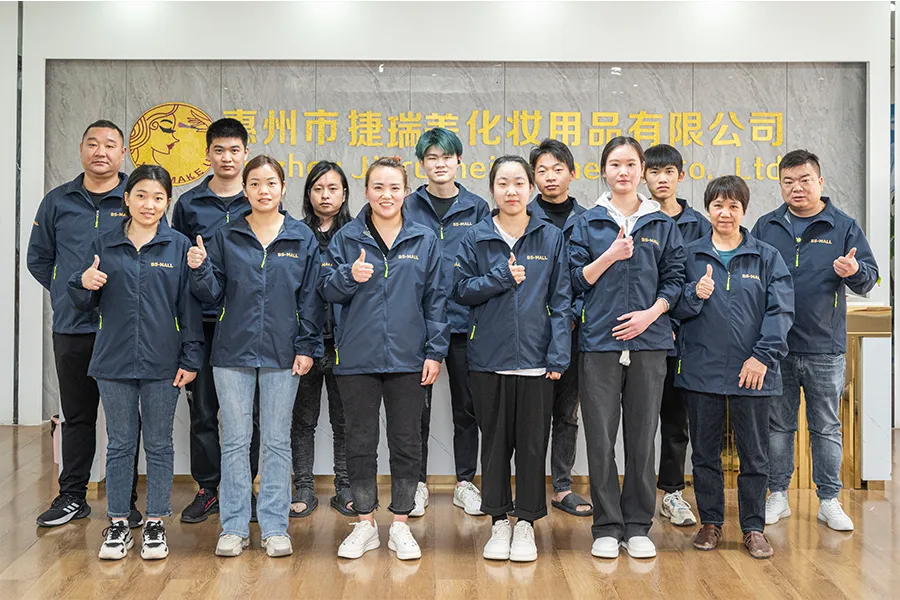
Production Capability Assessment for Makeup Brush Factories
Assessing a factory’s physical scale, machinery automation, and true output separates stable, scalable manufacturing partners from high-risk bottlenecks.
Factory Size and Layout
Facility footprint indicates high-volume scalability. Small, boutique workshops operate within 3,000–5,000 m² (producing 100k–300k brushes monthly). Larger export-oriented factories may operate facilities above 10,000 m², although factory size alone does not determine manufacturing capability.
More importantly, audit the floor layout. A professional plant maintains strict zoning: raw materials, bristle processing, ferrule crimping, handle painting, logo printing, QC inspection, and finished warehousing must be entirely segregated to prevent cross-contamination.
Machinery and Equipment
Premium brush manufacturing relies on precision machinery, not just manual labor. Look for dedicated equipment: automated bristle cutting/combing machines, precision wood lathes, electronic glue dispensers, and pneumatic ferrule crimpers.
High-tier factories utilize CCD vision-aligned laser marking systems for flawless logo centering. Lack of dedicated, automated machinery indicates heavy manual variability, which limits quality consistency and scalability.
Monthly Output Capacity vs. Outsourcing Risk
Verify output claims via recent, redacted production logs. Clarify if “capacity” refers to single brushes or multi-piece sets—a massive distinction for inventory planning.
Ensure your partner maintains In-House Production over core processes (bristle blending, ferrule assembly, final QC). Beware of suppliers heavily reliant on Partial Outsourcing for core assembly; outsourcing to unverified subcontractors introduces wild quality deviations and destroys batch traceability.
Quality Management: Process, Rejection Rate, and Consistency
Importers must verify two distinct documentation sets: operational factory certifications and strict market-access product compliance records.
| Inspection Stage & Focus | Buyer Protection & Value |
|---|---|
| 4-Stage QC Gates (IQC/IPQC/FQC/OQC) Full-cycle inspection covering raw materials, on-line assembly, final packing, and pre-shipment loading. | Zero Bad Batches: Catches defective hair filaments or contaminated parts early. Ensures zero defective products leave the factory floor, protecting your brand reputation. |
| Golden Sample Lock-In Strict sealing of approved pre-production samples, spec sheets, and dedicated raw material batch tracking. | What You See Is What You Get: Guarantees bulk goods match your approved prototype perfectly. Prevents hair stiffness shift, color mismatch, loose ferrules, or degraded packaging. |
Certifications: Market-Specific Compliance Documents
Importers need two document sets: baseline certifications (ISO, BSCI) to prove factory reliability, and market-specific proof (REACH, CPSIA) to ensure the product is legal to sell.
Required Baseline: ISO 9001, GMPC, BSCI / SMETA
These operational documents confirm systemic discipline. ISO 9001 ensures structural quality control, mitigating shedding and loose ferrules. GMPC / ISO 22716 enforces the strict hygiene necessary for tools contacting human skin. BSCI or SMETA audits prove ethical labor standards, a non-negotiable prerequisite for selling to major global retailers.
Market-Specific Product Compliance
While the importer holds ultimate legal liability for market notifications (such as EU CPNP or PIF logs), the factory must supply the foundational chemical and material laboratory data.
- EU REACH: Lab reports proving all paints, plastics, and glues are free of SVHCs (Substances of Very High Concern).
- US FDA MoCRA: Verification that the manufacturing facility is properly registered and prepared to support product listing requirements under the regulatory frameworks mandated directly by the U.S. Food and Drug Administration (FDA) MoCRA Guidelines.
- Cruelty-Free / Vegan Declarations: Chain-of-custody documentation confirming synthetic PBT/pet fibers and certifying no animal testing.
- Natural Hair Quarantines: If importing natural hair (goat, pony), the factory must supply valid veterinary sterilization certificates to pass border customs.
Sampling Policy: Timelines, Fees, and Golden Sample Protocol
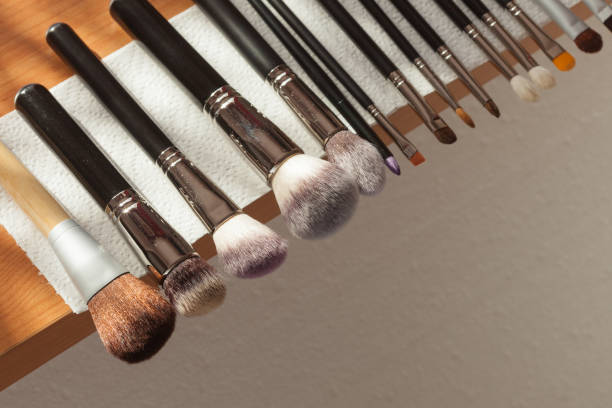
A disciplined sampling policy mitigates development risk, culminating in a signed protocol that governs mass production.
- Sample Timelines: Expect 7–10 days for custom prototypes. Upon physical approval, standard mass production requires 35–45 days depending on component complexity.
- Sample fees vary depending on design complexity, materials, and customization requirements. Some suppliers deduct approved sample costs from future bulk orders.
- Golden Sample Protocol: The signed pre-production sample is the binding source of truth. It must include: the physical countersigned brush, a comprehensive Tech Pack (with explicit dimensional tolerances), approved Pantone color tabs, final retail packaging mockups, and the finalized AQL inspection checklist.
Authenticity Verification: How to Verify Certification Authenticity
A certificate should always be checked for validity before it is used as a supplier qualification reference. Expert buyers actively validate documentation authenticity at the source.
Document-Level Inspection
Examine the scanned certificate carefully. The holder’s name and facility address must match your supplier’s corporate and manufacturing entities exactly. Verify the certified scope explicitly covers cosmetic brush or tool manufacturing—a generic certificate for “plastic injections” provides zero regulatory coverage for cosmetic applications. Check the issuance and expiration dates to confirm current validity.
External Channel Validation
Never accept a document at face value. Protect your supply chain by cross-referencing files directly with the issuing body:
- Database Audits: Visit the public portals of recognized international registrars (SGS, Intertek, TÜV, Bureau Veritas) and enter the certificate registration number to verify its active status.
- Full Report Requests: Demand the complete Multi-Page Audit Report. A single-page summary certificate is easily manipulated; the full report contains the true granular data.
- Identify Red Flags: Treat low-resolution scans, visible digital alterations, or unsearchable issuing agencies as immediate causes for rejection.
- On-Site Alignment: Ensure your third-party inspector uses the factory’s claimed ISO 9001/GMPC standards as the direct baseline for the physical site audit.
Many Tier-1 direct factories with flawless, fully verifiable compliance audits are actually the hidden “unsung heroes” behind the scenes, obscured by high-ranking trading profiles on popular B2B platform algorithms. To understand how to bypass these digital storefronts and source directly from the actual production lines, read our strategic comparison: Alibaba Supplier vs Direct Factory: Which Is Better for Sourcing Makeup Brushes.
Logistics: Lead Times, Port Proximity, and Incoterms Knowledge for Verifying Makeup Brush Factories
A factory’s logistical competence directly dictates your supply chain predictability. When auditing a potential manufacturer, you must verify their actual export experience and international trade fluency rather than just taking their word for it.
Verifying Actual Export Experience
Do not assume every factory can smoothly handle international shipments. You must verify their operational track record:
- Export License & History: Confirm whether the factory holds a direct export license or relies on a third-party trading agent. Ask for anonymous, recent Bills of Lading (B/L) or customs declarations for shipments to your target market (e.g., US or EU).
- Compliance & Documentation: Ensure they routinely generate accurate packing lists, commercial invoices, and Certificates of Origin (C/O) required to clear customs without delays.
Evaluating Incoterms Fluency
A qualified manufacturer must display sophisticated fluency in standard global shipping terms to protect your margins and clarify risk transfer:
- FOB (Free On Board) / FCA (Free Carrier): This is the baseline standard you should look for. The factory must demonstrate they can flawlessly manage domestic customs clearance and delivery to the port/carrier.
- EXW (Ex Works) Avoidance: If a factory pushes aggressively for EXW, it usually signals a lack of export infrastructure, forcing you to handle their domestic export clearance.
Communication Standards: Language, Response Time, and Escalation
Clear communication protocols prevent technical misunderstandings from turning into costly production delays.
Language and SLA Expectations
All core technical sheets, artwork dielines, and safety data must be processed in precise, professional English. Establish a shared technical glossary referencing explicit component terms (e.g., PBT synthetic blends, aluminum ferrule gauges, anodized finishes) and regulatory acronyms.
Enforce a strict Service Level Agreement (SLA): routine RFQs must be returned within 24–48 hours, active order updates must be provided weekly, and critical operational inquiries require a firm 24-hour turnaround window.
Escalation Protocols
Implement a formalized three-tier escalation protocol within your manufacturing contract to handle compliance or quality deviations immediately:
- Level 3 (Factory Director / General Manager): Triggered by critical regulatory failures, systemic material defects, or severe timeline breaches; mandates a direct executive alignment call within 24–48 hours backed by structured inspection data.
- Level 1 (Sales Account Executive): Resolves routine tracking and minor administrative clarifications.
- Level 2 (QC & Production Managers): Triggered by initial lab failures or sampling delays; requires a formal CAPA (Corrective and Preventive Action) report within 3–5 days.
Final Thoughts
Choosing a supply partner based on unit price alone ignores the massive liabilities of customs rejections, retail chargebacks, and product recalls. The rigorous certification, quality, and logistical benchmarks detailed in this framework represent your ultimate shield against supply chain volatility.
Don’t leave your product quality or regulatory compliance to chance. Utilize the stringent criteria established throughout this guide to evaluate your manufacturing partners. Contact our engineering and compliance team today to request a detailed, fully compliant quote and secure your verified pre-production samples—the logical next step in protecting your investment.