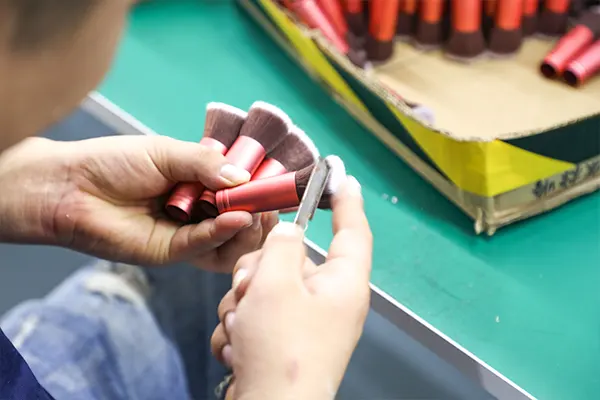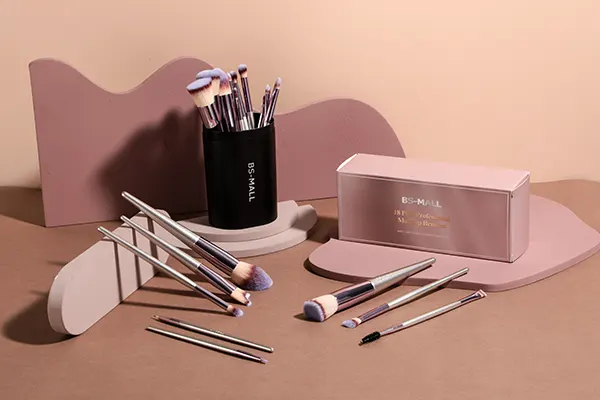


For growing beauty brands and cosmetic distributors, finding a reliable makeup brush manufacturer in China is essential for maintaining consistent quality, stable production, and predictable costs. Partnering with an unverified trading company masquerading as a primary factory introduces unacceptable risks—from erratic defect rates and regulatory non-compliance to dead inventory that erodes working capital.
To bypass these middlemen and secure a resilient supply chain, global brands rely on certified production powerhouses. Explore our cosmetic brush manufacturing capabilities to see how a audited primary factory eliminates these risks. This guide establishes a rigorous framework for evaluating OEM capabilities, verifying international certification stacks (ISO 9001, BSCI, SEDEX), and improving sample-to-bulk production consistency for enterprise-level scaling.
Why China Dominates Global Makeup Brush Manufacturing

China’s dominance in the global cosmetic tool sector extends far beyond simple labor cost advantages. This advantage comes from mature manufacturing clusters, experienced suppliers, and established supporting industries.
Production hubs: 深セン, 広州, Yiwu, and inland provinces
- Yiwu (Zhijiang) & Inland Hubs (Henan/Luyi): Yiwu remains the center for high-volume, cost-sensitive commodities and promotional lines. To combat rising coastal overhead, upstream labor-intensive processes—such as raw bristle sorting and bundle tying—are increasingly executed in dedicated inland hubs like Luyi County (Henan), while final quality control, assembly, and global logistics remain anchored in Tier-1 industrial zones.
- 深セン (広東省): The global benchmark for high-end, export-focused production. Shenzhen is known for export-oriented manufacturers, customization capabilities, and access to advanced supply chain resources. This hub primarily serves Tier-1 international beauty brands demanding strict adherence to western regulatory mandates.
- 広州 (広東省): Operating as a massive multi-category cosmetic ecosystem. Guangzhou provides access to a broader beauty supply chain, including packaging, 化粧品, and related suppliers.
- Cangzhou/Qingxian (hebei): The traditional epicenter of cosmetic brush manufacturing. Qingxian houses premium factories specializing in meticulous hair dressing, precise manual shaping, and high-end natural/synthetic blending. It represents the industry benchmark for mid-to-high-tier artistry brushes.
Why concentration in manufacturing clusters reduces your sourcing risk
Procuring from concentrated industrial ecosystems significantly mitigates supply chain vulnerability through distinct operational advantages:
- Built-in Production Redundancy: If a primary contract manufacturer encounters unexpected capacity limits or equipment down-time, the cluster provides immediate access to pre-vetted backup facilities utilizing identical tooling profiles and component standards.
- Upstream Supply Chain Stability: Raw material providers for premium synthetic fibers (such as BASF or DuPont filaments), copper/aluminum ferrules, and FSC-certified wood handles operate within the same geographic perimeter. This proximity eliminates lead-time delays and protects production schedules from regional logistical bottlenecks.
- Institutional Process Knowledge: These regions possess a dense talent pool of specialized manufacturing engineers, master hair-dressers, and compliance officers. This collective expertise minimizes the learning curve for complex, custom product development.
- Accelerated Cycle Times: The physical proximity of tooling shops, component suppliers, assembly floors, and export logistics partners optimizes the prototyping and troubleshooting phases, drastically reducing overall time-to-market.
Where to Find Manufacturers
Securing a reliable manufacturing partner requires a strategic, multi-channel procurement strategy: digital business-to-business (B2B) data triangulation, physical factory vetting at international trade expositions, and direct corporate outreach.
Online platforms: Alibaba, Made-in-China, 1688
Digital sourcing requires aggressive filtering to isolate primary factories from speculative middlemen. On Alibaba そして Made-in-China.com, initial filtering must target “Verified Manufacturers” または “Audited Suppliers” possessing a minimum of 5 years of verified operational history in the cosmetic tool category. A dedicated manufacturer usually has a clearer product focus and deeper technical information about cosmetic tools. Resellers consistently exhibit fragmented catalogs featuring unrelated consumer goods.
For advanced procurement teams, 1688.com offers direct access to domestic-facing factories operating at true ex-works (EXW) 価格設定. しかし, utilizing 1688 requires an experienced local sourcing agent to manage contract negotiation, domestic logistics, and independent quality assurance. Regardless of the digital platform, every prospective supplier must be cross-verified via live, unannounced video inspections of the production floor, specifically targeting raw material storage, ferrule crimping stations, and final quality control lines.
Trade shows: Canton Fair and Cosmoprof Asia
Physical trade expositions allow procurement executives to bypass digital intermediaries and evaluate manufacturing tolerances firsthand. The Canton Fair (Phase 3) in Guangzhou features hundreds of mass-market and mid-tier cosmetic tool manufacturers, providing a highly efficient venue for rapid, comparative benchmarking of standard component quality.
For luxury portfolios, innovative synthetic filaments, and advanced OEM/ODM collaboration, Cosmoprof Asia (alternating between Hong Kong and Singapore) represents the premier industry event. Exhibitors at Cosmoprof typically display superior technical capabilities, sustainable material innovations (such as PCR plastics and biodegradable handles), and sophisticated international compliance records. These expositions should serve as the initial step before scheduling formal, on-site factory audits in the adjacent Guangdong industrial clusters.
Direct outreach: finding factories with standalone export websites
Tier-1 manufacturers focused on the international market maintain dedicated, independent corporate portals detailing their technical infrastructure. Utilizing specific search parameters—such as “cosmetic brush OEM factory ISO 9001” または “private label synthetic makeup brush manufacturer Qingxian”—surfaces primary suppliers that do not rely exclusively on B2B directories.
Evaluate these corporate web assets for transparent operational indicators: explicit details regarding factory square footage, monthly production capacities, specialized machinery (例えば, automated fiber cutting and pad-printing equipment), and direct downloads of their certification portfolios. Reputable enterprise manufacturers establish clear, structured onboarding protocols for new brands, beginning with formal Request for Quote (RFQ) templates and advancing to paid engineering sample development.
Stock Your Salon with Best-Selling Cosmetics
Alibaba vs Direct Factory: Understanding the Difference
Navigating Chinese industrial supply chains requires distinguishing between a trading company (broker) and a direct primary manufacturer. Both models serve specific operational scales, but confusing the two can jeopardize project margins.
How to tell if an Alibaba listing is a factory or trading company
Do not rely on self-declared business types on B2B platforms. Validate the supplier’s true operational status using clear structural indicators:
- Product Line Specialization: Primary factories focus heavily on specific product categories. A dedicated brush factory produces brushes, スポンジ, and closely aligned cosmetic applicators. A trading company typically exhibits a broad, disjointed asset ledger containing disparate consumer electronics, apparel, or general merchandise.
- Technical Diagnostic Competence: Challenge the account representative with advanced engineering inquiries. Demand details regarding their ferrule tensile extraction testing protocols, VOC outgassing mitigation for handle coatings, and tolerance limits for bristle bundle density. Primary factory engineers provide precise technical specifications; trading intermediaries answer with generic marketing scripts.
- Unrestricted Live Telemetry: Request an immediate, unannounced live video walkthrough of the assembly and hair-dressing floor via standard communication applications. Legitimate manufacturers readily accommodate this request to demonstrate operational capacity. Resellers will repeatedly delay, cite proprietary restrictions, or limit viewing to isolated corporate showrooms.
- 最低注文数量 (MOQ) Architecture: Custom MOQ often varies from hundreds to several thousand units depending on materials, customization level, and production process. Trading companies often advertise lower, highly flexible MOQs because they liquidate overstock or consolidate small orders across multiple unverified workshops.
When each sourcing path makes more sense
- Trading Companies for Market Incubation: For early-stage startups or brands executing limited pilot tests with minimal capital, trading companies offer access to ready-made, off-the-shelf components with low minimum capital requirements, albeit at higher per-unit costs and variable quality control.
- Direct Factories for Brand Differentiation: When your product architecture requires proprietary industrial designs, custom-blended synthetic filaments, custom ergonomic handles, and absolute color matching, partnering directly with a primary factory is non-negotiable.
- Direct Factories for Cost Optimization: As order volumes scale to predictable, recurring runs, eliminating the intermediary’s commission is essential to expanding gross margins and funding downstream marketing initiatives.
- Direct Factories for Asset Security and Long-Term Scale: A direct relationship facilitates joint innovation, provides early access to proprietary material advancements, secures exclusive regional manufacturing rights, and integrates the supplier directly into the brand’s long-term enterprise resource planning (ERP) systems.
How to Shortlist: 5 Criteria That Actually Matter

Factory size alone does not determine reliability. The following factors provide a more practical way to evaluate suppliers:
| Criterion | なぜそれが重要なのか (The Real-World Impact) |
|---|---|
| MOQ Flexibility | Manages your startup capital, reduces inventory risk, and lets you test the market without committing to huge volumes. A partner who starts small is a partner who can grow with you. |
| OEM Capability & Past Work | This is the difference between a simple factory and a product development partner. It ensures your brushes are unique to your brand and not just a relabeled stock item. |
| Certification & ドキュメンテーション | Non-negotiable for selling in the US or EU. This proves the factory has basic quality systems (ISO 9001) and social compliance (BSCI), reducing your legal and retail risk. |
| Responsiveness & Communication | Poor communication during development costs time and money. Fast, clear, technical dialogue reduces errors, speeds up sampling, and prevents costly production mistakes. |
| Sample-to-Bulk Consistency | This is the ultimate test. A great sample means nothing if the bulk order is junk. A proven track record here protects your brand reputation and prevents customer returns. |
MOQ flexibility and willingness to start small
While industrial efficiency favors high-volume production runs, enterprise-grade partners offer structured, tiered MOQ architectures to support progressive product rollouts. A sophisticated manufacturer provides a clear pricing matrix that shifts based on the level of customization required: utilizing standard components with custom logo applications requires a lower MOQ than launching a proprietary, injection-molded handle design. Ensure your prospect explicitly outlines their scalability framework, providing transparent cost adjustments across volume milestones (例えば, 1,000, 3,000, そして 5,000+ 単位). Identifying a reliable manufacturing partner at this stage is the absolute prerequisite for controlling hidden upfront expenditures and optimizing your total cost of ownership. For a comprehensive analysis of capitalized outlays, review the メイクブラシブランドの立ち上げ費用の内訳: 実際にかかる費用.
OEM capability and past brand work
The elite tier of Chinese cosmetic tool manufacturers operates as comprehensive ODM/OEM development partners. They should possess documented expertise in engineering custom fiber blends—manipulating straight and wavy synthetic filaments to replicate the liquid-retention properties of premium natural hair. Investigate their portfolio history: request anonymous case studies or technical schematics of complex tool sets developed for international brands. Their engineering team must be capable of translating a high-level design concept into complete Bill of Materials (BOM) specifications, technical blueprints, and definitive tolerance ranges.
Certification stack and documentation readiness
If you plan to sell in the US, EU, or UK, your manufacturer’s documentation is non-negotiable. A reliable partner maintains a “documentation stack” to support regulatory and retailer compliance. The baseline corporate infrastructure must include fully validated ISO 9001 and BSCI or SEDEX (SMETA) social compliance audits. さらに, for brands exporting to the North American market, ensuring your primary factory aligns with the mandatory facility registration and safety substantiation updates under the U.S. FDA Modernization of Cosmetics Regulation Act (MoCRA) is a strict legal prerequisite to prevent cross-border custom impoundments.
Responsiveness and communication quality
Product development cycles frequently falter due to poor cross-border communication. Top manufacturers utilize dedicated, technically trained account management teams fluent in international business standards. Evaluate the substance of early-stage interactions: an elite partner does not simply agree to every request with vague affirmations. その代わり, they actively audit your design files, raise critical engineering flags regarding structural tolerances, and offer proactive optimizations to reduce manufacturing complexity and per-unit costs.
Sample-to-Bulk consistency track record
The single greatest point of failure in cosmetic tool sourcing is variance between an engineered prototype and mass production units. Because cosmetic brush assembly involves significant manual labor (especially during the hair-dressing and shaping phases), process control discipline is paramount. Inquire about their Standard Operating Procedures (SOPs) for in-line quality checks. Ensure the facility operates under a formal Golden Sample framework, where an officially approved, counter-signed sample is physically retained on the production floor as a live quality benchmark for every batch.
Red Flags That Signal an Unreliable Supplier
Identifying structural and operational anomalies early in the procurement cycle prevents costly downstream failures.
Warning Signs in Business Legitimacy and Communication
- Incoherent Corporate Identity: The supplier’s registered business license reveals a scope of activity completely unrelated to beauty tools, or lists their primary office within a residential district far removed from manufacturing zones.
- Documentation Evasion: The supplier refuses to provide unredacted, current copies of their BSCI or ISO certification records, or provides documents where the corporate entity names do not match the invoicing entity.
- Opaque Costing Frameworks: Quotes that are wildly lower than the regional market average indicate sub-standard materials (例えば, unwashed, shedding fibers or low-grade adhesive prone to breaking down) or hidden post-deposit surcharges.
- Non-Standard Financial Demands: Insistence on 100% upfront wire transfers via unverified channels for production runs, rather than standard international terms (例えば, 30% production deposit, 70% balance paid against the Bill of Lading following independent third-party inspection).
Warning Signs in Production Capability and Product Quality
- Defective First-Article Prototypes: Samples delivered with clear defects—such as asymmetrical heads, loose ferrules, visible adhesive residues, or severe outgassing smells—indicate a lack of basic pre-shipment inspection protocols.
- Resistance to Specification Freezes: The manufacturer hesitates to commit to a legally binding, signed Golden Sample or rejects the integration of detailed defect tolerance definitions into the final supply contract.
- Absence of Metrology Equipment: The factory floor lacks standard testing machinery, such as industrial pull-testers for ferrule adhesion, humidity chambers for handle stability, or weight-variance scales.
- Failure to Implement Corrective Actions: When engineering revisions are requested following initial sample testing, subsequent prototypes arrive with identical defects, demonstrating broken internal communication channels between administration and production teams.
Remote Vetting Without Visiting the Factory
When on-site international travel is restricted, procurement teams can use data triangulation and real-time remote verification to execute complete due diligence.
Video factory tours and what to look for
Conduct live, unannounced video audits using platforms like WeChat or Zoom to verify physical asset claims. A systematic inspection should follow the natural manufacturing flow:
Final Packing and Logistics Area: Ensure finished goods are stored safely off the floor on pallets, with export cartons clearly printed with shipping marks and tracking data.
Raw Material Warehousing: Verify proper temperature and humidity controls for stored timber, aluminum/copper blanks, and raw filament inventory.
Hair Preparation and Combing: Observe the sorting and mechanical blending of filaments. Note whether workers use precise weight scales to manage bundle sizing.
Mechanical Crimping and Assembly: Inspect the machinery performing the mechanical connection between the ferrule and the handle. Check that adhesive application is precise and managed by automated dispensers to ensure consistency.
In-Line Quality Assurance Stations: Confirm that inspectors use dedicated checklists and go/no-go gauges to check head shapes and ferrule attachment security right on the production line.
Using ImportGenius and trade data to verify export history
To verify whether a supplier has real export activity, leverage global customs manifest databases such as ImportGenius, Panjiva, または Envirocar. By entering the manufacturer’s exact corporate name or unique Chinese Unified Social Credit Identifier, you can extract their true historical shipping records.
Analyze these custom datasets for key validation metrics: confirm a consistent, recurring monthly or quarterly shipment history rather than erratic, isolated transactions; verify that historical product descriptions match the specific cosmetic tool categories under negotiation; and confirm their direct export experience into highly regulated western markets, ensuring their compliance teams are accustomed to international customs requirements.
Sample Testing: What to Evaluate Before Committing
Before executing a commercial contract and issuing a deposit, prototypes must undergo strict laboratory and physical stress testing to confirm performance durability.
Bristle Quality and Softness
The filament tip diameter must be completely uniform across the entire bundle profile. Inspect the brush tips under magnification to confirm that synthetic fibers retain their micro-tapered ends and have not been bluntly cut, which causes skin irritation and poor product pickup. Run the brush head across high-sensitivity testing surfaces to ensure zero scratchiness or abrasive feedback.
Bristle Retention and Shedding Test
Subject the brush head to standard mechanical pull testing. Utilize a calibrated pull-gauge to apply moderate tension across various zones of the bundle; a high-quality assembly exhibits zero loose fibers. さらに, execute an aggressive wash-and-dry cycle using standard cosmetic cleansers: the internal adhesive matrix must hold the filaments securely when wet, showing no shedding during subsequent mechanical friction testing.
Ferrule Attachment Strength
The mechanical crimping and internal adhesive bond between the handle, フェルール, and bristle base must form a rigid structural connection. Grip the handle firmly and apply multi-directional pressure to the ferrule; there must be absolute stability with zero structural play, clicking, or axis shifting. Any movement indicates insufficient adhesive volume or improper crimping pressure, which inevitably leads to total component separation under consumer use.
Ergonomic Mass Distribution and Balance
Evaluate the tool’s weight distribution using precision scale metrics. The center of gravity must align with the primary grip zone to ensure controlled cosmetic application. If manufacturing a multi-sku brush collection, verify that mass distribution remains consistent across the entire product line, ensuring that handles made of different wood, アクリル, or metal materials are weighted appropriately for their size.
Building a Long-Term Supplier Relationship
Transitioning a manufacturer from a transactional vendor into a strategic supply chain asset stabilizes long-term pricing, guarantees priority production scheduling, and fosters product innovation.
Fostering Mutual Trust and Strategic Alignment
- Operational Predictability: Provide the factory with rolling 12-month demand forecasts updated quarterly. This allows the factory to pre-order raw materials during market dips and allocate dedicated production line capacity well in advance.
- Strict Financial Discipline: Adhere strictly to agreed-upon payment schedules. Being a reliable financial partner elevates your brand’s priority status within the manufacturer’s client hierarchy.
- Structured Performance Reviews: Schedule bi-annual operational reviews focused on continuous improvement metrics: tracking historical defect rates, monitoring on-time shipping performance, and collaborating to optimize the overall Bill of Materials (BOM) cost structure.
Start with a core set of products and gradually increase SKUs and volumes as the manufacturer proves its reliability and quality. Once you have successfully locked down your primary manufacturing assets and finalized the specification freeze, the next strategic milestone is deploying your go-to-market infrastructure. To execute the next phase seamlessly, consult our operational blueprint on プライベートブランドのメイクブラシブランドを立ち上げる方法 2026.
Driving Innovation and Continuous Improvement
- Co-Development Initiatives: Leverage your manufacturer’s specialized R&D assets to pioneer exclusive product features. Work together to test next-generation, bio-based synthetic filaments or unique, sustainable handle coatings that set your brand apart in the market.
- Closed-Loop Quality Feedback: Supply the factory’s engineering team with direct data from customer returns and field performance reviews. This allows production managers to refine tooling calibration and optimize assembly SOPs for future runs.
- Formal Corrective Action Plans (CAPA): When quality variances occur, do not rely on informal promises. Demand a formal Corrective Action Preventive Action (CAPA) document that identifies the true root cause, implements immediate containment protocols, and updates permanent manufacturing controls to eliminate the defect from all future production cycles.
よくある質問
Is it safe to source makeup brushes from Alibaba in 2026?
Sourcing via Alibaba remains an effective procurement channel provided you treat the platform exclusively as an initial discovery directory. Security requires bypassing standard platform profiles and executing independent data verification: auditing corporate registration records, cross-checking trade manifests, demanding formal third-party quality inspections before final balance payments, and using secure escrow or Letter of Credit terms for initial transactions.
Can I audit a makeup brush factory in China without traveling?
はい. You can execute a comprehensive remote audit by pairing a thorough desktop review of the supplier’s verified international certification records (ISO, BSCI, SEDEX) with an unannounced, live video inspection of the factory floor. For complete validation, hire an independent, third-party inspection agency (such as SGS, TÜV SÜD, or QIMA) to conduct an on-site technical and social compliance audit, providing a full report with high-resolution photos and unbiased findings.
Should I sign an NDA before my first order with a brush manufacturer?
はい. A bilingual (English/Chinese) Non-Disclosure, Non-Use, and Non-Circvention (NNN) Agreement should be executed before transferring custom design blueprints, proprietary material specifications, or unique packaging files. Standard western NDAs are largely unenforceable in Chinese courts; an NNN agreement governed by Chinese law and designating jurisdiction in a relevant local court provides genuine asset protection.
A supplier claims to have certifications—how do I verify they are genuine?
Request high-resolution copies of all corporate certificates. For ISO 9001 validations, extract the unique certificate identification number and cross-reference it directly within the official database of the issuing certification body or via the CNCA (Certification and Accreditation Administration of the PRC) portal. For social compliance records, request the amfori BSCI audit summary report and verify the supplier’s active DBID status directly through the amfori platform network.
最終的な考え
Procuring cosmetic brushes from China at scale requires systematic risk management. Bypassing thorough due diligence in pursuit of lowest-cost quotes consistently introduces product defects that can quickly erode your brand’s market reputation.
You don’t have to navigate this complex supply chain alone. Contact our expert team today to streamline your sourcing process. As an experienced makeup brush manufacturer, BS-MALL supports brands with OEM development, sampling, and production management.