

A precise capitalization model for a makeup brush brand marks the line between a viable enterprise and a structural cash flow trap. Many online cost calculators focus only on product prices and overlook important expenses such as freight, import duties, パッケージング, and customer acquisition costs (CAC). These overlooked costs can create unexpected cash flow pressure before a brand even launches. These overlooked costs can create unexpected cash flow pressure before a brand even launches.
This guide provides a practical cost breakdown based on real manufacturing considerations. We break down capital requirements across Minimum Order Quantities (MOQ), primary/secondary packaging engineering, and the go-to-market (GTM) capital reserves required for launch. The data contrasts a lean $5K–$15K private-label framework against a capitalized $15K–$40K Direct-to-Consumer (DTC) architecture to establish a scalable operational plan, incorporating real-world manufacturing metrics utilized for producing custom makeup brushes at the enterprise scale.
Why Most Cost Estimates You Find Online Are Misleading

Online launch calculators typically isolate product sourcing unit costs while ignoring systemic enterprise liabilities. They capture immediate product launch variables but exclude the operational runway required to sustain a functional supply chain.
Depreciated Inputs vs. Structural Realities
Standard estimation models prioritize highly visible, easily quantified variables: baseline product acquisition, basic visual assets, and elementary e-commerce deployment. This creates a false sense of security regarding necessary working capital.
The operational variables that dictate long-term corporate viability are systematically omitted. A rigorous capitalization model must integrate:
- Logistics Amortization and Quality Assurance: International ocean/air freight, import tariffs (例えば, Section 301 tariffs where applicable), third-party in-line and pre-shipment inspections (例えば, ANSI/ASQ Z1.4 sampling standards), and a capitalized reserve for return merchandise authorizations (RMA) and factory defect allowances.
- Sustained Customer Acquisition (CAC Runway): Sourcing models often budget for an initial launch event while failing to capitalize the 6-to-12-month customer acquisition runway required to achieve self-sustaining velocity via performance marketing, content syndication, and structured influencer seeding.
- Operational Overhead and Inventory Cyclicality: Corporate registration, regulatory compliance fees, enterprise software infrastructure (ERP, CRM, specialized e-commerce stacks), transactional merchant processing fees, comprehensive product liability insurance, and the critical working capital required to execute a secondary production run before cash conversion from the primary run is realized.
Pre-Production Costs: サンプリング, NDA, and Design Briefs
Pre-production capitalization is driven by sampling iteration and precise engineering documentation. Budget allocations range from $200 に $1,000 for standard private-label catalogs, escalating significantly for custom geometries requiring specialized tooling.
Product Sampling Iteration Protocols
Sampling is the technical validation gate that mitigates mass-production defect risks. It checks key performance factors such as fiber softness, shedding control, ferrule strength, and overall brush balance.
Most brands should expect several sampling rounds before approving final production:
- ラウンド 1: Conceptual Geometric Validation: Evaluates baseline ergonomics, volumetric brush head density, and balance. Multiple filament variations (例えば, premium synthetic polyamides vs. engineered thermoplastic polyesters) are field-tested to isolate optimal performance.
- ラウンド 2: Refinement and Tolerance Calibration: Corrects deviations identified in Round 1. Adjustments focus on precise filament density mapping, handle chromatic alignment (Pantone matching), and structural logo application durability (例えば, pad printing vs. laser engraving).
- ラウンド 3: Production Sign-Off (Golden Sample): Mandatory for premium custom lines or builds utilizing proprietary injection molds. This round executes final performance stress tests and chemical resistance evaluations prior to signing the production release.
Factory pricing models for sampling vary by complexity. Standard catalog configurations incur nominal fees ($100–$300). Semi-custom designs involving unique surface finishes or custom branding typically range from $300 に $800. Fully custom, proprietary component designs requiring dedicated CNC machining or prototype molding require capital outlays between $800 そして $1,500+, exclusive of international express courier charges ($100–$300 per iteration).
Technical Specification Documentation and Intellectual Property Protection
The technical brief—or product spec sheet—serves as the legally binding manufacturing contract. A granular specification profile minimizes production deviations and reduces engineering iteration costs. It must explicitly define filament composition, ferrule gauge and material composition, exact handle dimensional tolerances, Pantone color codes, logo positioning vectors, and strict Acceptable Quality Limits (AQL).
Sourcing methods for technical documentation scale across three distinct operational tiers:
- Manufacturer Templates (Factory Co-Design): Minimizes upfront capital outlay ($0 direct cost, subject to a $30–$100 artwork tooling fee). This path is suitable for standard private-label projects utilizing open-market tooling.
- Contract Industrial Designers: The standard operational path for competitive DTC brands. Professional industrial designers deliver standardized technical drawings and material callouts. Costs range between $300 そして $1,000 for a core product line.
- Full-Service Design Agencies: Recommended for high-end positioning or brands targeting multinational retail placement. The agency manages comprehensive brand identity alongside packaging and industrial engineering, with deployment costs scaling from $5,000 upward.
For most emerging enterprises, the aggregated pre-production budget lands between $400 そして $1,500. Allocating capital to professional engineering specifications upfront protects against inventory write-offs and high return rates during commercialization.
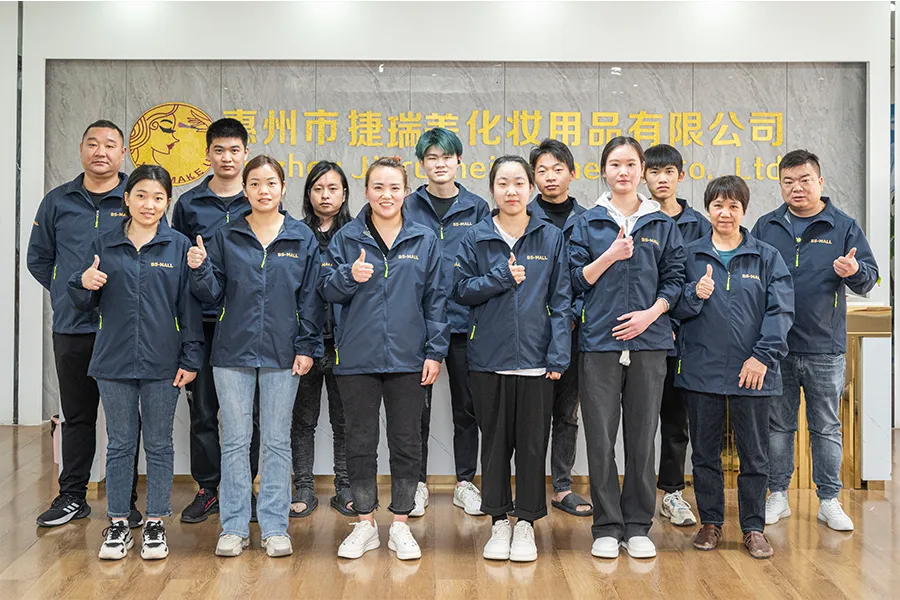
As an experienced makeup brush manufacturer, BS-MALL helps brands evaluate brush materials, sampling requirements, and production options based on their launch budget.
Boost Your Sales with Our Best-Seller.
最低注文数量 (MOQ): The Primary Driver of Working Capital
Minimum Order Quantities dictate upfront capital allocation requirements. Prioritizing low unit costs without analyzing structural MOQ thresholds can lock up necessary operational liquidity in dead stock.
Unit cost at 500 vs 1,000 vs 5,000 単位
The relationship between order volume and per-unit cost isn’t linear. Higher volumes get you a better price per brush, but demand a much larger check upfront. It’s a direct trade-off between unit margin and cash flow.
| Order Quantity | Per-Unit Cost Impact | Upfront Cash Impact |
|---|---|---|
| 500 Units | Highest. The factory’s fixed setup fees are spread across the fewest items. | Lowest total investment. Good for testing the market but squeezes margins. |
| 1,000 Units | Lower. Production is more efficient and fixed costs are amortized over more units. | Moderate investment. A common balance point for serious small brands. |
| 5,000 Units | Lowest. Maximizes production efficiency and material discounts. | Highest total investment. Ties up significant capital in inventory. High risk if sales are slow. |
How SKU count multiplies your inventory commitment
Don’t get fooled by a low MOQ on a single brush. Your real inventory cost is driven by the number of unique products—or Stock Keeping Units (SKUs)—you decide to launch. Each brush style, handle color, or special packaging is its own SKU, and each one comes with its own MOQ.
- Your total inventory order isn’t just the MOQ. It’s the MOQ multiplied by your number of SKUs.
- 例えば, launching just 5 different brush styles with a 500-unit MOQ means you have to order and pay for 2,500 total units upfront. That’s a huge cash commitment before you’ve made a single sale.
- A common and much safer strategy is to start with a small, focused collection of essentials. Validate the market with a few core products before expanding the line and multiplying your inventory risk.
包装: Box Design, Printing, and Unboxing Materials
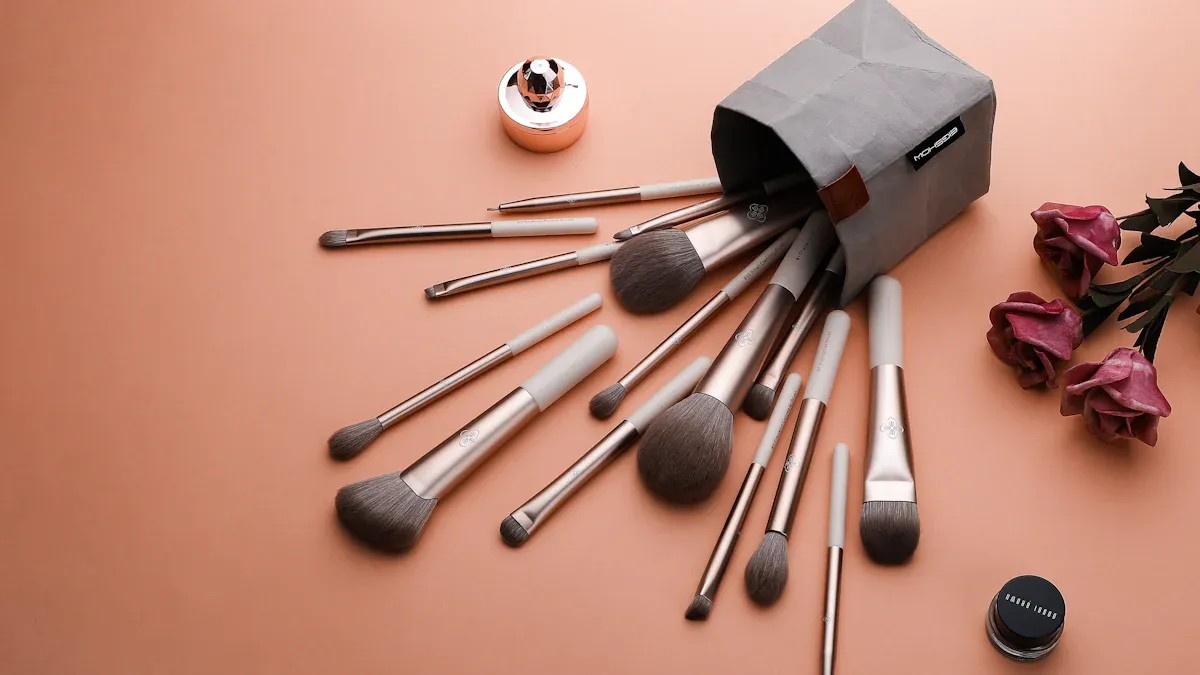
Your retail box can easily cost more than the brush itself. The biggest risk isn’t the unit price, but getting trapped by high Minimum Order Quantities (MOQ).
Primary packaging vs secondary (retail box) costs
Primary packaging is the functional stuff that directly protects the brushes—think individual poly sleeves or simple plastic trays. These are purely practical items, usually costing only $0.02–$0.08 per brush. They are a tiny fraction of the total product cost.
Secondary packaging is the branded retail box. This is what creates shelf appeal and the unboxing experience. The costs here are significantly higher, from $0.20–$0.60 for a standard printed folding carton up to $1.00–$3.00 or more for a premium rigid gift box.
For a new makeup brush brand, the secondary packaging can easily cost more than the brush. This is especially true for gift sets with high-end finishes like foil stamping or magnetic closures. On top of that, unboxing materials for direct-to-consumer orders—branded tissue paper, thank-you cards, custom mailers—add another $0.30–$1.00 per shipment.
MOQ traps in custom packaging
The biggest financial risk with packaging isn’t the per-unit price. It’s the high minimum order quantities (MOQ) that most manufacturers demand, often 500–1,000 units for each unique box design. This creates a serious cash flow trap. A startup launching just 8 brush SKUs might be forced to buy 4,000–8,000 boxes upfront, tying up capital before a single sale is validated.
High MOQs also create a huge risk of waste. If you change your logo, update a product claim, or need to add new regulatory text, you can make thousands of printed boxes obsolete overnight. You have to be smart to avoid this problem.
A few proven strategies can help you sidestep these traps:
- Use a single, generic box design and apply SKU-specific stickers.
- Find a brush manufacturer that offers its own low-MOQ, semi-custom packaging options.
- Use digital printing for your first few production runs to test the market before committing to a large offset run.
Branding and Creative: ロゴ, 写真, and Copywriting
In beauty, customers buy the brand, not just the brush. Your logo, photos, and copy are critical investments that define perceived quality and justify your price from day one.
Visual Identity: Logo and Photography
For a new makeup brush line, budget between $150–$1,000 for a logo and core visual identity. The most important part of the deliverable is getting the right files. You must get vector files (like AI or SVG) because they are essential for getting a clean print at a very small scale on the brush handles.
Photography is a critical investment. Plan for $300–$1,500 to get the shots you absolutely need to launch. This includes clean e-commerce images on a white background, macro shots showing the fine details of the bristles, and lifestyle photos that demonstrate the brushes in use.
Brand Messaging: Voice and Product Copywriting
初め, define a clear brand voice. You have to decide if your target is professional artists, which means using technical language, or if you’re selling to beginners with educational, reassuring copy. Pick one and be consistent.
Product descriptions must be specific. State the brush’s primary function (例えば, “for powder blush”), its key features (例えば, synthetic fibers for a streak-free finish), and the intended skill level. This clarity helps customers make confident buying decisions.
Compliance and Certification Costs
Compliance isn’t about one “brush certification.” It’s a mix of one-time setup costs and recurring fees that change depending on which markets you sell into.
One-time vs recurring certification fees
When you’re budgeting, you have to separate the costs you’ll pay once from the ones that will hit your books every year. It’s a common mistake to only plan for the initial setup.
- One-time costs are your upfront expenses to get the business legally off the ground. This includes initial business registration, legal setup, and the first round of product safety testing for each new brush or set.
- Recurring costs are ongoing expenses. Think of annual product liability insurance premiums and any fees for maintaining certifications like ISO or GMP, which require regular surveillance audits.
- Hybrid costs exist too. 例えば, a quality system certification might have a large initial setup fee followed by smaller recurring audit or renewal fees.
- Regulatory portal submissions, like the EU CPNP or UK SCPN, are best treated as recurring work. You have to do them for every new product or when you enter a new market, so the cost isn’t truly a one-off.
Which certifications are mandatory vs optional by market
What’s legally required versus what’s just good for marketing depends entirely on where you plan to sell. Don’t pay for certifications you don’t need, but don’t skip the ones that will get your shipment stopped at the border.
- For the EU and UK: Basic compliance is mandatory. This means following cosmetic safety regulations, ensuring your labeling is correct, and notifying products through the CPNP (EU) or SCPN (英国) portals. Certifications like ISO 22716 (GMP), Cruelty-Free, or ECOCERT are all optional but can be powerful marketing tools.
- For the US: Mandatory requirements encompass rigorous material safety verification, adverse event recordkeeping, and strict labeling alignment. Emerging enterprises must ensure full adherence to the statutory framework outlined in the FDA Modernization of Cosmetics Regulation Act (MoCRA) operational guidelines. Independent lab validations are commercially advantageous but legally discretionary.
- For China: You must meet basic safety and quality rules, and some regions enforce mandatory product testing. International certifications, like an SGS test report, are optional but frequently requested by importers to verify quality.
- For Halal-focused markets: If you’re targeting a market like Indonesia, Halal certification is mandatory for access. In other regions, it’s an optional choice that helps position your brand for a specific customer segment.
Fulfillment Setup Costs: DTC vs Amazon FBA
DTC setup costs focus on building your own infrastructure. FBA setup costs are about paying to fit into Amazon’s system, covering account fees and strict inventory prep requirements.
Direct-to-Consumer (DTC) Setup Costs
When you sell direct, you’re building your own fulfillment machine from scratch. The initial cash outlay goes into the tools and services that get your product from your hands to the customer’s.
- Online Store & Tech Stack: This covers your ecommerce platform, like a basic Shopify plan. You’ll also have one-time costs for a theme and domain, plus recurring monthly fees for essential apps that handle marketing, reviews, and upsells.
- In-House Fulfillment Equipment: If you ship orders yourself, you need hardware. Budget for one-time purchases like a thermal label printer, a digital shipping scale, and your first batch of mailers, boxes, tape, and any branded materials.
- Third-Party Logistics (3PL) Onboarding: If you outsource fulfillment, your setup costs shift to the 3PL. This often includes a one-time onboarding or account setup fee. You’ll also pay for the labor to receive and stow your first inventory shipment before any orders go out.
Amazon FBA Setup Costs
With FBA, you’re plugging into a massive, existing system. Your setup costs aren’t about buying equipment, but about paying fees and meeting Amazon’s strict operational requirements to get your inventory into their network.
- Account & Platform Fees: The main cost here is the non-negotiable monthly fee for an Amazon Professional Seller account. This is a fixed cost you pay just to have access to the FBA program.
- Inventory Preparation & コンプライアンス: Amazon has non-negotiable rules for how products arrive. Your setup costs must include expenses for UPC barcodes for your products, printing and applying FNSKU labels, and any required prep like poly-bagging or bubble wrapping to meet their standards.
- Initial Inbound & Storage Fees: This is a two-part cost. 初め, you have to pay to ship your bulk inventory to the fulfillment centers Amazon assigns you. Second, you start incurring storage fees the moment that inventory is checked in, even before you make your first sale.
Marketing Budget for a First Launch
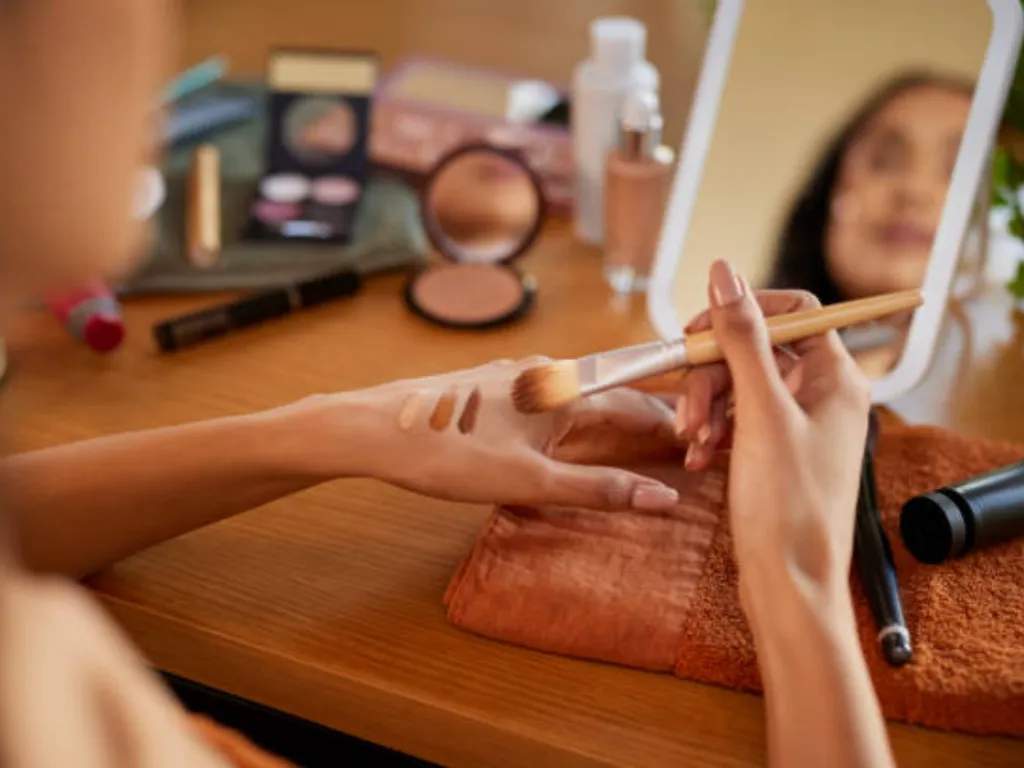
For a new makeup brush brand, your marketing budget isn’t an afterthought. It’s often a bigger investment than your first batch of inventory, so plan accordingly.
Determining Your Overall Launch Budget
Let’s get realistic about numbers. A lean, DIY-heavy marketing push for a new makeup brush brand will run you between $1,000 に $3,000 for the first three months. If you want a more moderate launch with some actual ad spend, you’re looking at a $3,000 に $10,000 予算. For many beauty startups, marketing is the single biggest check you’ll write, often costing more than your initial product inventory. Don’t fall into the trap of thinking a good product sells itself—it doesn’t.
Your total budget really comes down to your goals. A smaller, organic-focused launch can be done on the lower end. It requires more time and sweat equity. An aggressive launch that leans on paid ads and influencer collaborations from day one demands more capital upfront. There’s no right answer, but you need to match your budget to your ambition.
Structuring Your Marketing Spend
You need to split your funds across a few core areas: defining your brand identity, producing high-quality photos and videos, running paid ads, and getting your product into the hands of influencers (known as “seeding”). A smart plan is to front-load your spending on creative assets before you launch. Get your photos and videos locked in first. For brands aiming to accelerate growth through co-branded partnerships, exploring how beauty influencers create their own makeup brush line provides critical benchmarks for structuring revenue-share agreements and upfront advance models. それから, during and after the launch, shift the bulk of your budget toward customer acquisition through ads and influencer campaigns.
If you have to prioritize one thing, make it professional-level visual content. Makeup brushes are a tactile product sold in a visual world. Nobody can feel the softness of the bristles through a screen. Your photos and videos have to demonstrate the brush’s performance and build trust. Skimping here is one of the fastest ways to kill a new brush brand before it even gets started.
Budget Tiers at a Glance
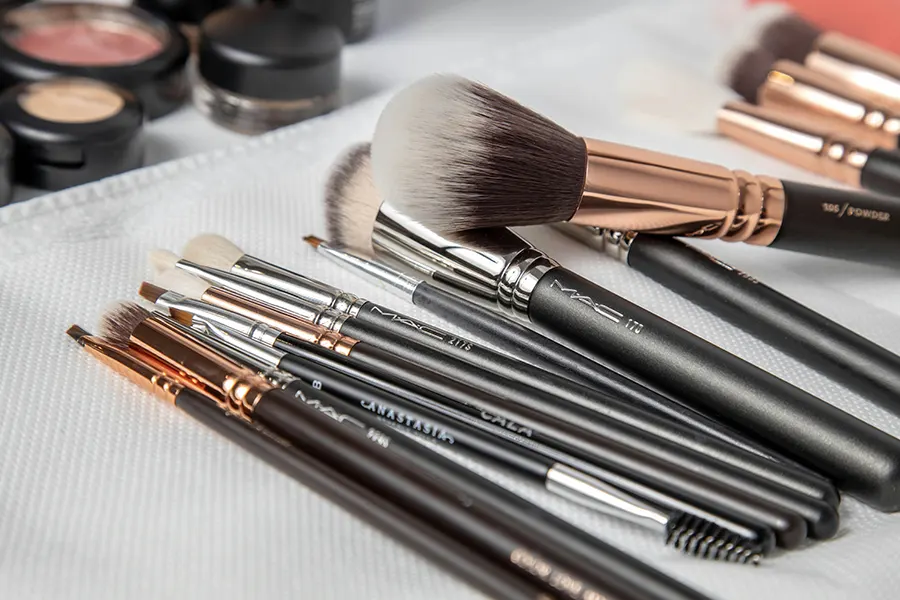
Your initial funding level determines product customization options, manufacturing quality controls, and brand positioning potential. The following tiers analyze digital brand capitalization profiles for specialized beauty tools, independent of full cosmetics color lines.
Entry Tier ($5K–$15K Cash Injection) — Private Label / OEM Strategy
This tier is designed for brands testing the market with existing factory designs and limited customization. The objective is commercial proof-of-concept, not proprietary innovation. If upfront capitalization remains highly constrained, dynamic sourcing optimization dictates assessing OEM vs ODM makeup brushes: which model is right for your business to safely align tooling risk with localized cash flow reserves.
Operational Capabilities:
- Utilize standard manufacturer design catalogs (pre-existing handles, stock synthetic filaments, standard aluminum ferrules). Production volumes hover around 100–500 standard brush sets.
- Execute baseline branding using stock factory packaging personalized with single-color pad printing or high-resolution custom labels.
- Deploy standard e-commerce templates with organic social outreach and grassroots creator gifting networks.
- The founder manages day-to-day operations, including supply chain management, customer support, and direct shipping.
Critical Structural Limitations:
- No options for custom component molding or proprietary industrial design modifications.
- Restricted SKU variety; brands must focus capital on a singular, high-utility hero set rather than an expansive collection.
- Limited access to custom engineered fiber blends or premium handle treatments due to high factory raw material MOQs.
- Minimal capital remains for agency brand design, professional editorial photography, paid performance marketing, or formal PR outreach.
Mid Tier ($15K–$40K Cash Injection) — Competitive DTC Architecture
The sweet spot for launching a competitive digital brand. This tier provides adequate capital for custom material selections, professional branding, and an funded customer acquisition runway.
Operational Capabilities:
- Fund multiple prototype iterations to optimize filament density, tip geometry, and handle weight distribution using high-grade synthetic materials.
- Launch an expanded product matrix featuring a central hero set supported by strategic standalone utility SKUs.
- Partner with professional design studios for custom packaging engineering, high-end retail folding boxes, and a premium unboxing experience.
- Deploy a professional e-commerce platform supported by high-quality content, targeted beauty PR, and performance ad spend.
- Implement third-party quality control inspections at the factory and utilize entry-level inventory planning software.
Critical Structural Limitations:
- Insufficient funding for deep, proprietary brush architectures with dozens of unique SKUs or complex multi-fiber compositions.
- Cannot capitalize large-scale retail distribution rollouts, which require extensive co-op marketing budgets, in-store display fixtures, and retail staff training.
- Cannot support long-term proprietary material research and development cycles; designs must optimize existing market technologies.
Premium Tier ($40K+ Cash Injection) — Proprietary Enterprise Build
Enables the launch of a fully custom product ecosystem designed for brands planning broader customization, retail expansion, and multi-channel growth. This model is designed for rapid multi-channel scaling, major retail distribution, and comprehensive media coverage.
Operational Capabilities:
- Fund proprietary injection molds, custom ferrule shapes, and unique, engineered synthetic fiber blends validated by industry professionals.
- Develop a comprehensive, professional-grade product architecture encompassing consumer sets, specialized individual eye/face tools, and elite artist kits.
- Establish multi-stage quality control protocols, including in-line production monitoring and third-party pre-shipment inspections.
- Partner with established branding agencies to design custom structural packaging with premium finishes, turning the unboxing experience into a brand asset.
- Launch with strong market impact using premium beauty PR campaigns, paid influencer partnerships, and sufficient inventory capital to fulfill large retail purchase orders.
- Onboard specialized functional talent to manage supply chain operations, digital acquisition, and corporate accounts.
Critical Structural Limitations:
While highly capitalized, this tier cannot fund a simultaneous global launch across multiple parallel beauty verticals (例えば, color cosmetics, complex skincare formulations) without additional financing rounds. It does not guarantee major retail shelf retention without continuous, heavily funded marketing support.
よくある質問
What is the minimum budget needed to test a makeup brush brand idea in 2026?
A small-scale market test can sometimes be started with around $3,000 or less by using stock brush designs, limited SKUs, smaller order quantities, and a highly DIY approach to branding and marketing. しかし, this budget is mainly suitable for validating product demand rather than building a fully developed beauty brand. For a more professional launch with custom packaging, stronger branding, inventory flexibility, and customer acquisition activities, most new makeup brush brands should expect an initial budget of around $5,000–$15,000 or more.
How many sample units should I budget for?
For a private-label catalog launch of a single brush set, budget for 15 に 30 complete evaluation sets across multiple iteration rounds. For custom geometries requiring new handle or ferrule development, brands usually need a larger number of samples to validate different components and production tolerances before mass production. These samples are necessary to confirm factory tolerances, gather professional feedback, and generate digital content before releasing the main production funds.
Can I get a single quote for both brushes and packaging from a manufacturer?
はい, it is common for makeup brush manufacturers to provide a bundled quote that includes both the brushes and the packaging. This approach can simplify budgeting and logistics. For maximum flexibility, you can ask for two quotes: one for the brushes alone and another that includes your specified packaging. This lets you compare the manufacturer’s packaging costs against sourcing it from a separate supplier.
Are certification fees a one-time cost or a recurring expense?
Compliance costs are a mix of both asset types. One-time fees cover initial toxicological lab tests, brand registry listings (例えば, Leaping Bunny validation entries), and initial corporate entity registration. Recurring fees—typically charged annually—include licensing rights to display certification trademarks on packaging, regular third-party factory audits, and ongoing corporate entity updates.
最終的な考え
Building a sustainable brand requires a clear, data-driven financial plan. The capital models outlined in this guide help protect emerging brands against the common cash flow misallocations that challenge many startups during product commercialization.
To move from strategic planning to production, translate this framework into exact manufacturing numbers based on your specific design geometry, target volume, and packaging specifications. Contact our supply chain team to establish an operational production plan tailored to your capital strategy.