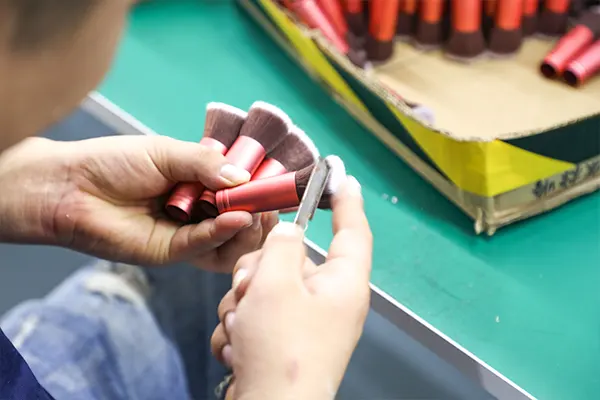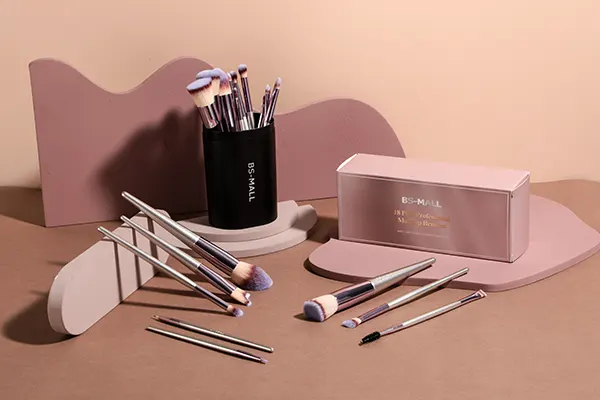


A supplier verification checklist helps importers avoid common sourcing mistakes before placing large makeup brush orders. As BS MALL emphasizes, many sourcing problems are not discovered until after production begins, when changing suppliers or fixing quality issues becomes expensive.
This 30-point verification system provides specific acceptance standards for manufacturing quality, including bristle shedding limits and ferrule pull-force tests. We cover critical documentation like market-specific certifications (EU REACH, US CPSIA) and the golden sample protocol to protect your investment before you place an order.
Makeup Brush Supplier Checklist: 10 Critical Verification Steps for Importers

Quick Comparison Overview
| Nama | Kategori | Key Outcome | Summary |
|---|---|---|---|
| Business Legitimacy Verification | Supplier Vetting | Risk Reduction | Verifies licenses and trade history to prevent partnerships with unqualified or fraudulent suppliers. |
| Production Capability Assessment | Operational Audit | Scalability & Reliability | Checks factory size, machinery, and monthly output to ensure they can handle order volumes. |
| Sistem Manajemen Mutu | Kontrol kualitas | Product Consistency | Ensures bulk production consistently matches the approved golden sample via documented QC checkpoints. |
| Sertifikasi & Compliance Verification | Regulatory Compliance | Market Access | Confirms supplier meets standards like ISO 9001 and regulations for legal market access. |
| Golden Sample Protocol | Product Development | Specification Lock-in | Establishes an approved sample as the master reference to lock in all production specifications. |
| MOQ and Pricing Structure Analysis | Financial | Cost Optimization | Analyzes how unit costs decrease at higher volumes to optimize margins and total cost. |
| Integrated Packaging Development | Product Launch | Speed to Market | Runs brush and packaging design in parallel to significantly shorten product launch timelines. |
| Logistics and Supply Chain Vetting | Operations | On-Time Delivery | Evaluates lead times, port proximity, and Incoterms knowledge for reliable delivery calculations. |
| Communication Standards | Supplier Management | Efficient Problem Solving | Establishes clear expectations for response times and escalation to ensure timely problem resolution. |
| Product-Specific Acceptance Standards | Jaminan Kualitas | Pertunjukan & Daya tahan | Uses measurable physical tests like shedding and pull-force to approve or reject production batches. |
Why Importers Need a Structured Checklist, Not Gut Instinct
Relying on gut instinct instead of a structured checklist exposes brush importers to severe risks. A single oversight in compliance, kualitas, or logistics can trigger cascading failures, turning your investment into a total financial loss.
The compounding cost of a missed verification step
Each informal decision or skipped check creates a financial risk that grows as the product moves from the factory to the customer. A small saving upfront can lead to major costs later, from retailer penalties to complete inventory write-offs.
| Oversight Category | Potential Financial Impact |
|---|---|
| Regulatory Failures | Missed compliance testing (MISALNYA., MENCAPAI, CA65) risks border seizures, mandatory product destruction, and heavy retail penalties, turning orders into total losses. |
| Documentation Gaps | Omitted compliance files (MISALNYA., PIF, CPNP) cause prolonged launch delays, redundant re-testing costs, and capital locked in unsellable stock. |
| Quality Oversights | Inadequate pre-production sampling or final inspections generate high defect rates, resulting in costly returns, Ulasan negatif, and expensive inventory rework. |
| Logistics Miscalculations | Unaccounted peak-season lead times force expensive air freight upgrades and trigger severe vendor chargebacks for late retail deliveries. |
Scale Your Brand with Premium OEM/ODM Brush Solutions

Business Legitimacy Verification
Verifying a supplier’s business and export licenses is the critical first step to confirm their legal status. Vetting these credentials filters out fraudulent operators and eliminates compliance risks from the start.
Business License Scope and Beauty Tool Manufacturing Capability
| Verification Point | What to Check |
|---|---|
| Business Scope Verification | Confirm the registered scope covers manufacturing or assembly (MISALNYA., daily necessities, plastic products, or beauty accessories) to ensure they are a real factory, not a pure broker. |
| Manufacturing Qualification | Confirm the supplier possesses appropriate production facilities, strict workshop hygiene controls, and robust quality management procedures (QMS) optimized for skin-contact beauty tools. |
| Physical Address Audit | Cross-reference the registered business license location via satellite mapping, video audits, or on-site checks to verify a genuine, functioning industrial site. |
| Supply Chain Transparency | When working with trading partners, demand full transparency and request the underlying partner factory’s credentials to validate actual manufacturing legitimacy. |
Export license and trade history verification tools
| Verification Point | What to Check |
|---|---|
| Export Authorization | Verify valid export licenses and customs registration to ensure lawful international trade and prevent global shipping delays. |
| Trade History | Review redacted historical shipping documents (MISALNYA., Bills of Lading) to confirm consistent export experience with makeup brushes. |
| Corporate Status | Cross-check legal standing via official registries and screen against international sanctions lists for compliance due diligence. |
| Financial Reliability | Assess payment histories and terms; utilize secure payment methods for initial orders to mitigate transaction risks. |
Business license scope and cosmetic manufacturing authorization
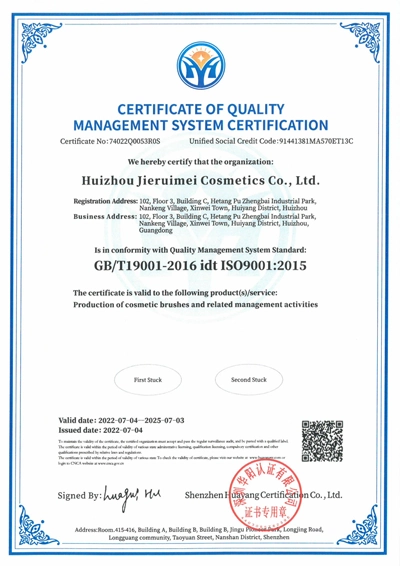
Makeup brushes don’t require a cosmetic manufacturing license unless pre-filled with formulas. Simply verify your supplier is legally registered to manufacture and export beauty accessories.
Business License Requirements for Makeup Brush Importers
For Brush-Only Import Businesses
Makeup brushes are generally classified as beauty tools or cosmetic accessories rather than cosmetic products. Importers should ensure their business registration covers activities such as importing, wholesaling, or distributing beauty accessories.
Additional registrations, such as customs-related requirements, depend on the target market and import regulations.
When Cosmetic Manufacturing Requirements Apply
Different requirements may apply when a business handles cosmetic formulas, including filling, pencampuran, or repackaging products such as powders, krim, or liquids.
For private-label products that combine brushes with cosmetic formulas, importers should confirm that suppliers have the appropriate manufacturing qualifications and follow relevant quality standards.
Export license and trade history verification tools
Audit supplier export rights and shipment history through official trade data. A proven track record is essential to eliminate customs delays and financial risks.
Verifying Export Authorization and Shipment History
Export Authorization and Documentation
Before working with a supplier, confirm that they have the necessary export qualifications, including business registration and customs export records. Reviewing their experience with international shipments and required customs documents helps reduce risks during delivery.
Correct HS code usage and familiarity with import requirements are also important indicators of export experience and compliance.
Assessing Export Track Record
A supplier’s shipment history can provide insights into their actual export capability. Consistent international shipments, experience in your target market, and verified business records are positive indicators of reliability.
Importers should also review supplier profiles, sertifikasi, and third-party verification records on B2B platforms to better evaluate their legitimacy and operational experience.
Production Capability Assessment
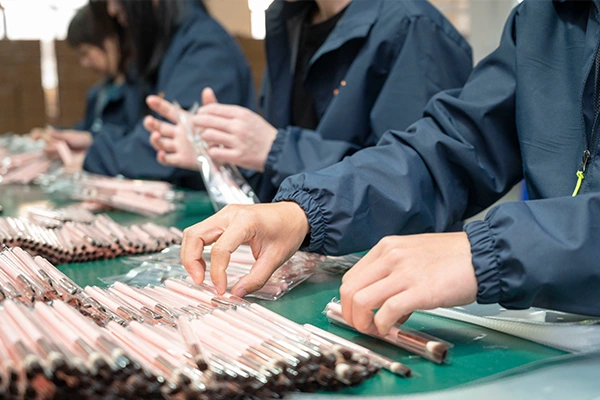
Audit a factory’s scale, peralatan, and production model to guarantee capacity and quality consistency. Evaluating these metrics prevents bottlenecks and secures long-term profitability.
Factory size, machinery, and monthly output capacity
A supplier’s physical and technical resources directly impact their ability to deliver consistent quality on time. We look for concrete evidence of scale and specialization, not just verbal promises, to confirm a partner can support our brand’s growth without compromising quality.
| Assessment Metric | Verification Standard & Details |
|---|---|
| Factory Size & Layout | Scalable facilities with parallel production lines to handle high-volume orders. Layout must feature strictly segregated zones for raw materials, manufaktur, QC inspection, and finished goods to eliminate cross-contamination. |
| Specialized Machinery | Equipped with advanced tools for critical stages: precision bristle shaping, combing, perekatan, dan crimping ferrule. Must include dedicated QC equipment like tensile pull-force testers to prevent bristle shedding. |
| Monthly Output Capacity | Verified production capacity backed by actual manufacturing logs. The supplier should provide granular capacity breakdowns by specific brush types rather than vague, generalized aggregate figures. |
Whether production is in-house or partially outsourced
Understanding a supplier’s production model is key to managing quality and risk. Whether they manufacture everything themselves or rely on subcontractors directly affects our ability to control the final product.
Quality Management: Process, Rejection Rate, and Consistency
QC Checkpoints Across Production
A reliable supplier should have quality checks throughout the manufacturing process, termasuk:
- Incoming Material Inspection: Verify bristles, ferrules, and handles against approved specifications before production.
- In-Process Quality Control: Monitor key factors such as bristle density, adhesive application, and ferrule assembly during manufacturing.
- Final Inspection: Check finished brushes for appearance, struktur, penumpahan, and performance consistency.
- AQL Inspection: Use sampling-based inspections before shipment to identify critical, major, and minor defects.
Maintaining Consistency Between Sample and Bulk Production
Consistency depends on using clear production references and standardized processes:
- Golden Sample Reference: The approved sample and technical specifications serve as the benchmark for mass production.
- Pre-Production Sample Approval: Confirm that the production process can replicate the approved quality before full-scale manufacturing.
- Standardized Processes: Control key production parameters to reduce variation between batches.
- Production Monitoring: Regular inspections help identify and correct deviations during manufacturing.
Maintaining Consistency Between Samples and Bulk Production
Common Causes of Sample-to-Bulk Differences
Variations between approved samples and bulk orders often come from changes in raw materials, assembly processes, adhesive application, or product dimensions. Untuk kuas riasan, differences in bristle batches, ferrule assembly, and handle measurements can affect the final appearance and performance.
Key Controls for Production Consistency
To minimize quality variations, suppliers should establish clear production controls, termasuk:
- Golden Sample Reference: Use an approved sample as the standard for bulk production.
- Technical Specifications: Document key materials, dimensions, and tolerances to guide manufacturing.
- In-Process Inspection: Check production samples during manufacturing to identify issues early.
- Material Verification: Confirm that bulk production materials match the approved sample specifications.
Certifications: Market-Specific Compliance Documents
Required Baseline: ISO 9001, GMP, BSCI or SMETA
These certifications establish a factory’s fundamental commitment to quality, hygiene, and ethical operations. They are often a prerequisite for doing business with established brands and retailers, as they help mitigate common risks in the production of cosmetic tools.
When executing this checklist, remember that verifying bulk production compliance is arguably the most critical step to prevent border detentions or retail recalls. For a deep dive into validating factory credentials, refer to our guide on Cara Memverifikasi Sertifikasi Pabrik Kuas Rias Sebelum Memesan.
Market-Specific: EU REACH, US CPSIA, and Cruelty-Free Declarations
Beyond the baseline, market-specific documentation is mandatory to legally clear customs. Misalnya, exporting to the EU requires strict adherence to heavy metal limits under REACH, while shipping to the US demands compliance with California Proposition 65 standards.
To ensure your custom components meet these safety thresholds, you can verify the exact laboratory testing requirements outlined in the SGS Cosmetics and Personal Care Testing Services. Failing to secure these verified lab reports from your supplier can result in immediate border seizures and costly retail recalls.
Sampling Policy: Garis waktu, Fees, and Protocol Alignment

Sampling Timelines
A clear sampling process helps align product expectations before mass production. Standard brush samples usually take around 7–10 days, while custom OEM projects may require more time due to tooling or material development. After sample approval, mass production typically takes 30–45 days depending on project complexity.
Sample Fees and Terms
Suppliers may charge sample fees to cover materials and development costs. Before placing an order, confirm whether sample fees are refundable or can be credited toward bulk production to avoid unexpected costs.
Sample Approval and Golden Sample Process
The approved sample should become the production reference for quality control. Key steps include:
- Recording specifications such as bristle type, dimensions, dan bahan.
- Confirming approval from both buyer and supplier.
- Labeling and storing the approved sample to prevent production inconsistencies.
MOQ and Pricing Structure: Tiered Costs and Hidden Fees
How Order Volume Affects Unit Cost
Unit pricing usually decreases as order quantity increases because setup and production costs are spread across more units. Smaller orders often have higher per-unit costs, while larger volumes benefit from economies of scale.
Be aware that prices shown on B2B platforms may reflect high-volume orders. Always confirm pricing based on your actual MOQ and order quantity.
Setup Fees and Additional Costs
Custom projects may involve one-time fees such as tooling, contoh, or setup costs. When comparing suppliers, request a detailed quotation that separates unit prices from additional charges to understand the true total cost.
Logistics: Lead Times, Port Proximity, and Incoterms Knowledge
Production Lead Times vs. Total Shipping Time
Supplier lead times usually cover only manufacturing. The actual delivery timeline also includes quality inspection, packing, inland transportation, ocean freight, and customs clearance. A 25–45 day production period may extend to 45–90 days for door-to-door delivery.
Larger orders often improve production efficiency but may require more time to complete. Plan inventory schedules based on the full production and shipping timeline, not just factory lead time.
Port Location and Incoterms Impact Costs
Factories near major ports, such as Shenzhen or Ningbo, can reduce inland transportation costs and improve shipping efficiency. When comparing quotes, always confirm the Incoterms. EXW covers only the product cost, while FOB typically includes delivery to the port and export handling.
A reliable shipping plan should match your order volume and production schedule to avoid delays, storage fees, or unexpected logistics costs.
OEM Packaging Integration: Parallel Development
An experienced OEM supplier can develop brushes and packaging simultaneously to reduce launch time. By coordinating brush design, packaging structure, and artwork within one timeline, brands can avoid delays caused by separate development stages.
The process starts with the brand’s requirements and uses shared specifications to align product dimensions and packaging design. Confirming fit and tolerances early helps prevent redesigns and ensures a consistent unboxing experience.
Communication Standards: Language, Response Time, and Escalation
Language & Response Expectations:
English is the standard language for contracts, specifications, and compliance documents. A shared glossary for materials, performance terms, and regulations helps avoid misunderstandings. Routine inquiries are typically answered within 24–48 hours, while complex custom projects may require additional time.
Escalation Process:
For quality or compliance issues, suppliers should provide clear evidence, identify root causes, and implement corrective actions. Key escalation triggers include regulatory non-compliance, unauthorized material changes, and major quality defects.
Resolution Levels:
- Level 1: Sales contact handles routine communication.
- Level 2: QC or technical teams address quality-related issues.
- Level 3: Management involvement for critical risks affecting delivery or partnership.
Makeup Brush-Specific Acceptance Standards
Handle Balance & Ergonomics Check:
Evaluates the brush’s center of gravity and grip comfort to ensure better control. Detail brushes require precise balance near the ferrule, while face brushes are designed for smooth, sweeping application.
Bristle Shedding Test:
Checks bristle retention through pull, shake, and repeated-use simulations to prevent shedding during application and cleaning. Premium brushes typically require stricter shedding control based on fiber type and usage.
Ferrule Pull-Force Test:
Measures the strength of the connection between the handle and ferrule to prevent loosening or detachment. Testing requirements vary depending on brush size, struktur, and quality standards.
What information do I need to provide a supplier to get an accurate quote?
Provide a detailed spec sheet covering brush type, materials for bristles, ferrule, dan menangani, plus branding and packaging requirements. Include order quantity, target price, and any market-specific compliance needs. A complete request ensures you receive precise and comparable quotes, avoiding later surprises or hidden fees.
How do I verify the factory’s certifications are real and current?
Ask for a complete digital copy of each certificate. Check that the factory name, alamat, and scope match your supplier’s details. Most importantly, use the certificate number to check its status directly on the issuing body’s official website. Always confirm the expiration date is still valid for 2026.
How large should my first order be when working with a new supplier?
Your first order should be a pilot run—large enough to meet the supplier’s MOQ but small enough to limit your financial risk. The goal is to test their production consistency against your approved sample and evaluate their communication and logistics. This approach validates the supplier before you place larger-scale orders.
Pikiran Terakhir
Focusing only on unit price leaves your business exposed to predictable supply chain failures. This checklist is a financial tool designed to convert hidden risks—from quality control to customs compliance—into verifiable checkpoints. A reliable supply chain is built on systematic verification, not guesswork.
The checklist provides the framework, but validation requires action. Put our process to the test by requesting our complete certification and compliance documentation. For those ready to move forward, our team is prepared to develop a custom OEM sampling plan for your brand.
We strongly recommend printing out this 30-point checklist to use as an active scoring sheet during your next supplier walkthrough or site visit. To prepare thoroughly for an on-site evaluation, check out our comprehensive walkthrough on Cara Mengaudit Pabrik Kuas Rias Sebelum Memesan.