

Avoiding the common mistakes beauty brands make sourcing makeup brushes is critical to protecting your launch budget そして brand equity. Seemingly small errors in supplier selection or sampling create hidden costs through customer returns, retail chargebacks, そして unsellable inventory that quietly drain cash flow.
This analysis isolates the eight most critical sourcing failures that lead to these compounding costs. Based on our foundational expertise as a direct メイクアップブラシメーカー, we provide a framework for defining clear 品質基準, vetting suppliers beyond unit price, and structuring sample rounds to prevent costly bulk production errors before they happen.
Why Sourcing Mistakes Are More Expensive Than They Look
Sourcing mistakes create hidden, compounding costs across the entire product lifecycle. These costs in returns, reputational damage, and lost sales almost always exceed the apparent savings from a low-priced first order.
Downstream costs that compound from a bad first order
When a brush applies makeup poorly, creating streaks or patchy coverage, customers often blame our makeup formulas instead of the tool. This can depress sales across the entire product line, not just the brushes.
Defects like shedding bristles or loose handles directly increase costs. Each return drives up expenses for replacement shipments, customer service workload, and restocking, adding hidden operational costs to every unit sold.
Our retail partners react quickly to poor quality. High return rates can trigger financial chargebacks or cause them to reduce a product’s shelf space. This not only hurts immediate sales but also jeopardizes future listings and brand growth.
In the age of social media, negative feedback spreads fast. Reviews and posts about scratchy or flimsy brushes can damage brand reputation and erode the trust we’ve built with customers.
8 Costly Mistakes New Beauty Brands Make
Early sourcing mistakes create hidden costs that compound across your entire business. Seemingly small errors in sampling, supplier selection, or specification lead to higher defect rates, increased customer returns, and long-term brand damage that far outweigh any initial savings on unit price.
間違い 1: Approving Bulk Production Based on Photos Alone
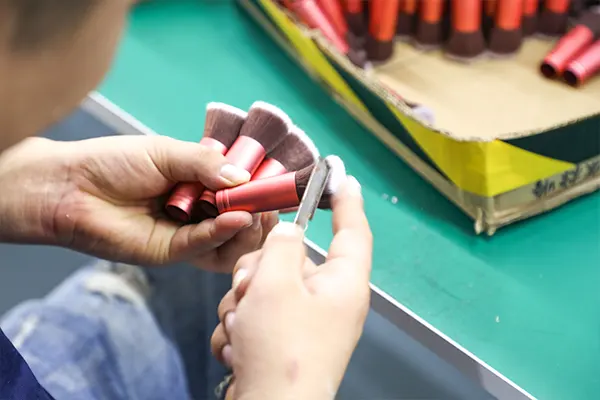
として direct-to-brand manufacturer, we know firsthand that digital lenses lie. A studio photograph can make a cheap brush look flawless, but it completely conceals the structural engineering そして material integrity of the product. In our workshop, we routinely see photo-perfect brushes fail in real-world use, leading to high return rates.
From a production floor perspective, a photograph cannot verify the critical quality indicators that our technicians test daily:
- Fiber Engineering & Payoff: Photos cannot show the microscopic crimping of synthetic fibers. It won’t tell you if the hairs have been micro-tapered to maximize product pickup and release without scratching the skin.
- Adhesive & Ferrule Integrity: Images hide what happens inside the ferrule. You cannot see if the tuft is secured with high-grade, heat-resistant industrial glue, or if a low-cost vendor used cheap adhesive that causes massive shedding after the first wash.
- Ergonomic Weight & 感じる: Pictures mask the tactile experience. プレミアム solid wood or weighted resin handles provide a luxury, balanced feel that can easily be faked by cheap, hollow plastic in a digital layout.
- Manufacturing Tolerances: A single hero photo gives zero assurance of batch-to-batch consistency. It will not reveal if your 10,000-unit bulk run will suffer from misaligned logos, loose ferrules, or deformed head shapes.
- Dimensional Boxing Fit: A picture cannot catch alignment errors. Even a 1mm manufacturing deviation in tuft height or handle length can cause the brush to crush against your retail packaging during transit.
間違い 2: Skipping Multiple Sample Rounds
Trying to save time and money by cutting down on sample rounds almost always increases total costs. Each round serves a specific purpose, moving from a basic concept to a production-ready tool. Skipping these steps means you are doing your product development during bulk production, which leads to costly reworks, launch delays, and unsellable inventory.
A structured sampling process typically involves several stages:
- ラウンド 1 (Concept): This first sample confirms if the factory understands your basic design, 形, and quality tier. It’s a test of their capability.
- ラウンド 2 (Refinement): Based on your feedback, this round fine-tunes the critical details: fiber softness, head density, handle weight, and cosmetic finish. This is where the brush starts to feel like your brand.
- ラウンド 3 (Validation): This is a pre-production sample (PPS) made with the final materials and processes. It confirms the brush can be manufactured consistently and validates the final packaging fit.
間違い 3: Working with Unverified Brokers Who Subcontract Your Order
As a direct manufacturer, we frequently see new brands fall into the ‘Sample-from-A, Production-from-B’ trap set by predatory middlemen. You approve a pristine sample, but the order is secretly subcontracted to an unvetted, low-tier workshop to cut costs. This results in severe quality drift… When you work with us, you get total transparency: your samples and bulk orders are produced on the exact same assembly lines, managed by the same QC team.
間違い 4: Launching Too Many SKUs in Your First Order
Launching a wide range of brushes from day one is a common cash flow trap. New brands often assume more choice is better, but it creates an inventory imbalance. You end up with one or two hero brushes selling out while the other 15 SKUs tie up capital and warehouse space. This complexity makes forecasting impossible and drains resources that could be focused on marketing your winners.
A smarter approach is to launch with a focused, strategic assortment, like one hero SKU and a curated 3- to 5-piece set. This structure is more capital-efficient and helps you learn from real sales data before expanding the line.
間違い 5: Finalizing Packaging After the Brushes Are Done
Treating packaging as an afterthought is a costly logistical error. When packaging is developed sequentially instead of in parallel with the brushes, you often end up with inefficient and expensive solutions. A box that is slightly too large or an insert that doesn’t fit securely can dramatically increase shipping costs, especially with fulfillment services like Amazon FBA.
FBA and other carriers use dimensional weight to calculate shipping fees. If your lightweight brush set is in a bulky box, you pay for the space it occupies, not its actual weight. Designing the brush and its packaging together ensures an efficient, protective, and cost-effective final product.
間違い 6: Making Vegan or Cruelty-Free Claims Without Documentation
Making marketing claims without the paperwork to back them up creates significant compliance risk. Marketplaces like Amazon can suppress or remove listings for unsubstantiated claims, halting your sales overnight. a “ビーガン” claim for a makeup brush requires confirmation that every single component is free from animal-derived substances—not just the bristles.
Your supplier must provide documentation confirming the vegan status of:
- 毛: 100% premium synthetic PBT/PET fibers.
- のり: Animal-free polyurethane hot-melt adhesives (tested to withstand temperatures up to 60°C to prevent de-gluing during ocean transit).
- Coatings: Lead-free, non-toxic PU lacquers that meet REACH and Prop 65 compliance.
間違い 7: Not Defining Quality Standards in the Brief
A professional manufacturing brief leaves no room for guesswork. In our factory, we define quality using rigorous, measurable tolerances: precise fiber density, ferrule-to-handle tensile strength (tested by pull-force gauges), and a maximum acceptable shedding rate of less than 2 hairs during initial comb-through.
A strong sourcing brief removes ambiguity by defining clear standards for:
- Fibers: Type (例えば, PBT synthetic), target softness, and acceptable shedding tolerance.
- Components: Ferrule and handle material, coating type, and print requirements.
- Tolerances: Acceptable limits for defects, color matching, and dimensions.
- 包装: Carton dimensions, insert design, and final presentation.
間違い 8: Choosing a Supplier Based on Price Alone
Selecting a supplier solely on the lowest quote is often the most expensive decision a brand can make. A low price frequently hides the true cost of poor quality, which appears later in the form of customer returns, 否定的なレビュー, and unsellable inventory. 初期の “savings” are quickly erased by the compounding costs of a bad product.
The lowest price often fails to account for:
- 材料品質: Cheaper suppliers may substitute lower-grade fibers or weaker glues that lead to shedding and breakage.
- Hidden Costs: The quote may not include tooling, robust packaging, or third-party inspection fees.
- QC & Communication: Lower-cost factories may have less stable quality control systems and weaker communication, making it difficult to resolve issues.
- Total Cost of Ownership: The true cost isn’t the unit price but the landed cost per *sellable* unit after accounting for defects, returns, and replacements.
Premium Wholesale Beauty for Higher Margins
How to Source Smarter From Your First Order
To ensure your first launch is a success, our factory focuses on protecting your upfront cash flow and establishing quantifiable quality blueprints from day one.
Prioritize Cash Flow and Calculate True Landed Cost
We eliminate the pricing guesswork introduced by sourcing middlemen. Before committing to online platforms, it is critical to evaluate アリババサプライヤーと直接工場: 化粧ブラシを調達するにはどちらが良いですか? Our team provides an open-book, total landed-cost analysis for every SKU—incorporating direct unit costs, tooling, and export packaging—allowing you to lock in accurate gross margins before production begins.
We eliminate the pricing guesswork introduced by sourcing middlemen. Our team provides an open-book, total landed-cost analysis for every SKU—incorporating direct unit costs, tooling, and export packaging—allowing you to lock in accurate gross margins before production begins.
さらに, our standard factory workflow protects your financial security: we operate on a 30% deposit + 70% balance 構造. The final 70% is due only after your order passes quality control. We fully welcome and facilitate third-party independent inspections (such as SGS or Intertek) directly inside our facility before cargo release.
Define Quality in Detail and Vet Your Partners Rigorously
Vagueness is the enemy of industrial quality. Before any deposit is made, our engineering team locks down a comprehensive Technical Specification Sheet for your order. This blueprint quantifies all critical parameters: fiber blend ratios, tuft density, ferrule-to-handle tensile strength, non-toxic paint compliance, and international FSC certification standards for sustainable wooden handles, ensuring mass production perfectly mirrors your approved standard.
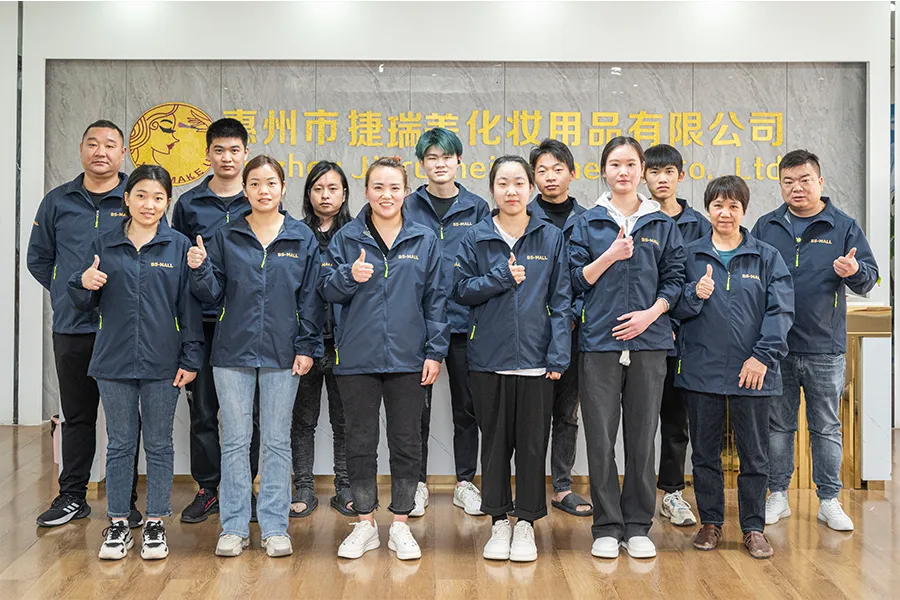
として fully integrated factory, we enforce strict vertical supply chain control. Unlike trading companies that secretly subcontract orders to unvetted workshops, every stage of your run—from fiber combing to handle stamping—takes place under our roof, managed by our permanent workforce.
ついに, we don’t rely on guesswork. Our facility runs on a strict dual-layer QC protocol: Incoming Quality Control (IQC) on all raw materials, and a final Outgoing Quality Control (OQC) audit. Using your approved Golden Sample as the absolute benchmark, we ensure only zero-defect inventory reaches your fulfillment network. To secure your entire import process from factory floor to customs, review our 輸入者向けの化粧ブラシ サプライヤー チェックリスト: 30 購入前に確認すべきこと.
最終的な考え
Choosing a supplier on price alone is a bet against your brand’s future. The sourcing discipline outlined here isn’t an expense; it is the most direct way to protect your margins from customer returns and negative reviews.
Your brand’s reputation is built on the quality of your tools. Before you commit to a bulk order, let’s build your technical specification sheet and review physical samples. Contact our team to get your first order right.
よくある質問
How do I know the bulk production will match the sample I approved?
To ensure your bulk order matches the approved sample, use a combination of tools. Lock in all details with a technical specification sheet, approve a physical “golden sample” as the final standard, and implement rigorous quality control checkpoints at every stage—from raw material incoming inspection (IQC) to final pre-shipment auditing (OQC). This ensures the bulk order perfectly mirrors your approved standard before leaving our warehouse.
How many sample rounds is enough?
While it varies by complexity, 2–3 structured sample rounds are typical. The first round checks the concept, the second refines details like hair density and handle finish, and the third confirms the pre-production sample. A very clear initial brief is the best way to reduce the number of rounds needed.
What is a golden sample and how do I use it?
A golden sample is the single, physically perfect sample you approve to serve as the benchmark for mass production. あなた, your factory’s quality team, and any third-party inspectors will use duplicates of this sample to visually and physically compare against the bulk units, ensuring everything from hair softness to logo placement remains consistent.
I have already made some of these mistakes — what can I do now?
If you find issues in a finished order, first assess the severity of the defects and negotiate a remedy with your supplier, like a discount or rework. For the future, create a “golden sample” from your best existing unit and formalize your quality standards in writing. This creates a clear benchmark for all future production runs.