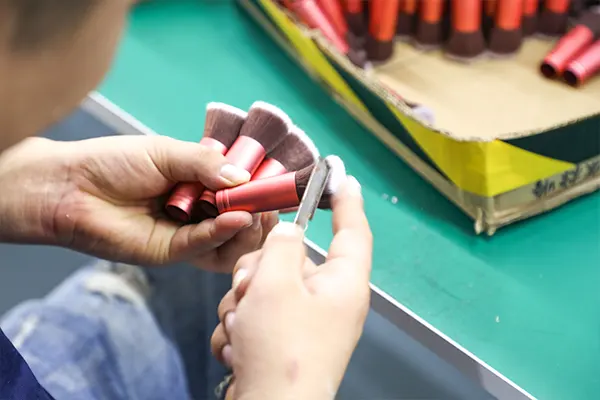


Deciding between an Alibaba broker and a direct factory procurement model for wholesale makeup brushes directly impacts your gross margins and brand equity. Sourcing through unverified intermediaries may add additional margins to the final product cost, alongside compounding operational liabilities—including five-figure losses from domestic customs seizures and regulatory product recalls due to fragmented, non-compliant supply chain links.
This article compares both sourcing options based on cost, カスタマイズ, 品質管理, and supplier verification factors. We evaluate structural variations across production lead times, multi-stage quality management checkpoints, and corporate registration audits to accurately isolate true Tier-1 manufacturers from intermediaries. The objective is to provide an enterprise framework for securing a scalable, legally compliant supply chain that preserves structural profitability.
What to Check Before Choosing an Alibaba Supplier or Factory

Relying on intuition within cosmetic accessory procurement can lead to unnecessary cost increases. A single unverified step in the supplier onboarding process quickly escalates into cascading downstream liabilities, including inventory impoundment, extensive product rework, and systemic customer returns.
For e-commerce brands, procurement strategy hinges entirely on capital efficiency and velocity. While direct factories demand higher minimum order quantities (MOQ) to amortize retooling costs, digital marketplaces offer an agile sandbox for testing market viability. For brands looking to deploy capital efficiently, navigating this friction requires a specialized approach—specifically, understanding how to source private label makeup brushes for Amazon FBA sellers helps balance low upfront inventory with fast-turnover supply chains before scaling to primary production assets.
The Compounding Cost of a Missed Verification Step
In industrial makeup brush manufacturing, upstream operational oversights amplify exponentially down the line. Bypassing a standard verification gate triggers a sequence of supply chain failures that erodes operating capital and degrades brand equity. The financial impacts of these specific process failures are detailed below.
| Omitted Verification | Downstream Financial Impact |
|---|---|
| Factory vs. Trader Audit Failure | Incurs a hidden 5%–15% middleman markup and severs direct engineering control, quietly siphoning five-figure sums from multi-year procurement budgets. |
| Omitting Golden Sample Freeze | Approving an unquantified prototype induces severe variance during mass production, triggering high defect rates, 否定的なレビュー, and expensive rework. |
| Neglecting Regulatory Audits | A single restricted chemical infraction triggers immediate customs seizures and inventory destruction, while poor internal QC guarantees high defect rates. |
| Payment Identity Mismatch | Remitting capital to unverified entities or personal accounts eliminates legal leverage, forcing the importer to absorb 100% of any production or logistics losses. |
Business Legitimacy Verification
Mitigating systemic risk requires rigorous data triangulation. An offshore supplier’s regulatory documentation must align with their operational assertions. Discrepancies within corporate registrations or licensed business scopes serve as immediate indicators of transactional risk.
| Verification Domain | Critical Compliance Parameters & Risk Indicators |
|---|---|
| Business License & Scope Audit |
• Scope Check: Must explicitly state “manufacturing” または “処理” for cosmetic tools. “Wholesale/trading” indicates an intermediary. • Data Matching: Corporate name must perfectly align across the business license, supplier profile, and bank ledger. • Licensing & Lab Tests: Liquid/powder lines require a Cosmetics Manufacturing License. Third-party testing (SGS/Intertek) must be cross-referenced and active. |
| Export Credentials & Track Record |
• Export Authority: Direct export capacity is required. Third-party brokers introduce contractual ambiguity and customs liabilities. • Trade Data Triangulation: Audit transaction velocity and volume specific to target markets (US/EU). Disproportionate volume in unrelated categories flags a trader. • Risk Screening: Cross-reference external corporate registries to confirm active operating status and screen for outstanding litigation. |
Request product test reports (例えば, REACH, CPSIA) and verify that the applicant name on the documentation matches the active supplier entity. Importers must cross-reference these submissions directly through the official CPSC Accredited Laboratories Registry to ensure the testing facility holds valid corporate credentials; an outdated report or one under a mismatched trading name offers zero regulatory protection.
Partner Directly with a Trusted Makeup Brush Manufacturer.
Production Capability Assessment
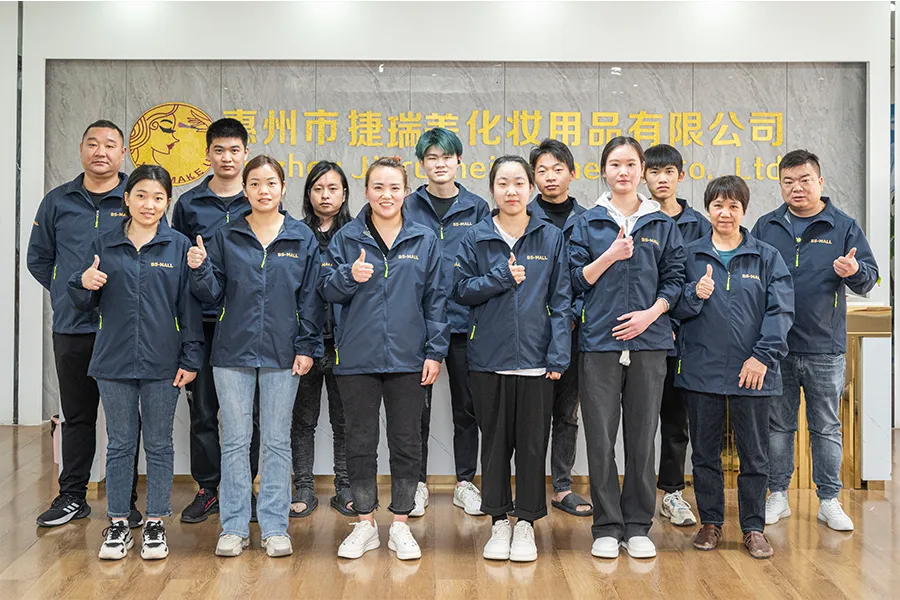
Validating a supplier’s true operational capacity requires an on-site or third-party physical asset ledger verification. Importers must bypass baseline marketing claims and directly audit industrial machinery, true monthly throughput, and the exact ownership structure of the manufacturing facility.
Disrupting the intermediary layer requires identifying geographic manufacturing clusters. High-tier industrial cosmetic brush production in China is heavily localized—predominantly concentrated in regions like Cangzhou (hebei) for high-grade bristling and Shenzhen (広東省) for premium precision assembly. To systematically bypass trading entities disguised as manufacturers and trace your supply chain directly back to these specialized industrial zones, executing a rigorous audit protocol on how to find a reliable makeup brush manufacturer in China is critical for establishing direct-to-factory cost parity.
| Assessment Variable | Mandatory Operational Verification Parameters |
|---|---|
| Facility Footprint & Throughput |
• Scale & Layout: Tier-1 exporters exceed 10,000 m² with strict zoning (raw materials, combing, assembly, QC, warehousing). Baseline shops range only 3,000–5,000 m². • Automation Assets: Verify automatic bristle shaping, precision ferrule crimpers, laser marking, and laboratory digital pull-testers. • Capacity Audit: Cross-reference production logs and customs filings. Tier-1 plants yield 1M–5M units/month per SKU, compared to entry-level outputs of 100K–300K. |
| In-House Depth vs. Subcontracting |
• Core Processes: True OEM factories keep bristle preparation, ferrule bonding, crimping, and final QA under one roof to minimize variance. • Sub-Tier Transparency: Disclose all outsourced secondary tasks (例えば, handle lacquering). Suppliers must submit audit protocols for their sub-vendors. • Traceability Risk: Unregulated outsourcing breaks component batch traceability. Audit to isolate true manufacturers from mere assemblers relying on external workshops. |
Quality Management: Process, Rejection Rate, and Consistency

Data-driven quality management depends on strict quality gates across all manufacturing stages. This framework helps ensure that bulk production runs consistently match the authorized technical benchmarks.
QC Checkpoints across the production line
An industrial quality control program rejects the concept of end-of-line inspections. Quality assurance must be integrated as an array of independent operational gates, capturing component variance early in the manufacturing cycle to minimize material waste and lead-time delays.
| Production Phase | Technical Inspection Criteria | Operational Objective |
|---|---|---|
| Incoming Material IQC | Fiber length/tensile/color check; ferrule caliper tolerance; handle moisture/adhesion audit; structural adhesive verification. | Rejects non-compliant raw materials before line entry to ensure batch uniformity. |
| Combing & 整形 | Digital knot mass measurement for density tolerances; profile audit via master templates; ferrule base alignment verification. | Locks in exact volumetric fiber density and contour compliance per SKU spec. |
| In-Line Assembly & Bonding | Adhesive volume control and cure duration monitoring; pneumatic crimp pressure audit; axial alignment and logo clarity checks. | Catches real-time machine drift to prevent mass defects from adhesive or crimp errors. |
| Finished Goods QA | Shedding analysis via dry pull/wet wash tests; destructive ferrule-to-handle pull force testing; high-intensity visual defect sweep. | Validates structural durability and aesthetic finishing before packaging release. |
| Pre-Shipment Audit | Randomized statistical sampling via international AQL gates; barcoding/labeling validation; master shipper moisture check. | Final compliance gate ensuring 100% correct cargo configuration prior to factory release. |
How Consistency is Maintained Between Sample and Bulk
Eliminating variance between an approved prototype and a bulk delivery requires a rigid engineering process, not optimism. True manufacturers rely on engineering systems that turn product design specifications into a repeatable science.
Material Lot Traceability: Facilities must log raw material batch codes for all incoming fiber shipments, aluminum stock, and coatings. If a new material lot enters the line mid-production, it triggers an immediate quality gate check against the master sample to ensure performance parity.ess for ensuring sample-to-bulk consistency. If they can’t show you a documented system like this, that’s a major red flag.
Master Sample Control: Factories isolate a minimum of three identical golden samples following client sign-off. One is provided to the client, the second is secured in the plant’s internal QA lab, and the third is deployed directly to the production line workstation as a physical benchmark.
Specification Freeze: Prototypes must be accompanied by an immutable engineering document. This sheet quantifies every variable, including synthetic fiber composition (例えば, precise ratios of straight and wavy PBT fibers), exact knot weight in grams, ferrule wall thickness, exact timber handle density, and certified color codes.
Pilot Batch Testing: Prior to triggering volume manufacturing runs (例えば, over 10,000 単位), factories must execute a controlled pilot run of 100 に 200 units on the main production line. This batch undergoes destructive testing to confirm tool calibration and process stability before scaling up.
Precision Process Calibration: All manufacturing variables must be documented and locked into machine logic. This includes volumetric adhesive distribution settings, pneumatic crimping pressures, and thermal curing parameters. Line operators cannot adjust these settings without engineering clearance.
Certifications: Market-Specific Compliance Documents
Regulatory certifications represent the primary legal defense against global customs seizures, product liability claims, and terminal brand damage. Importers must secure verified compliance assets prior to authorizing production capital.
| Regulatory Protocol | Operational Realities Verified | Mandatory Enterprise Documentation |
|---|---|---|
| ISO 9001 Alignment | Systemic, repeatable quality processes across design, material IQC, calibration, and CAPA gates. | Active registration showing manufacturing scope for cosmetic tools. |
| Cosmetic GMP | Advanced environmental hygiene, particulate mitigation, and cross-contamination prevention. | ISO 22716 certification and plant sanitation standard operating procedures (SOPs). |
| Social Compliance | Ethical labor standards, working hours compliance, workplace safety, and fair compensation. | Unedited BSCI or SMETA audit report issued within the last 24 月. |
| EU REACH | Component chemistry (lacquers, adhesives, metals) is free from hazardous SVHC levels. | Compliance declaration backed by accredited lab tests for heavy metals/phthalates. |
| US CPSIA | Mandatory lead, コーティング, and phthalate limits for children’s items (ages 12 and under). | CPSC-accredited lab test reports supporting a Children’s Product Certificate (CPC). |
| Cruelty-Free Status | Zero animal testing across supply chains; verification of synthetic fiber origin claims. | Corporate-signed declaration alongside verified material master data sheets. |
Sampling Policy: Timelines, Fees, and Golden Sample Protocol
What a Complete Golden Sample Protocol Should Include
The golden sample serves as the ultimate legal and engineering baseline for evaluating mass production output. A weak prototype protocol introduces substantial room for interpretation during disputes. A professional protocol must secure all technical parameters to remove subjective evaluation.
| Protocol Component | Technical & Contractual Specifications Required |
|---|---|
| Physical Master Prototype | Definitive golden sample built on final production tooling; serves as the absolute baseline for mass production QA sign-off. |
| Comprehensive Specification Sheet | Exhaustive engineering drawing defining exact geometric dimensions, weight tolerances, material grades, and Pantone/Pantone matching system codes. |
| Approved Packaging Benchmark | Physical samples of retail boxes, protective inserts, master shippers, and verified barcode print layouts. |
| Bilateral Quality Sign-Off | Formal, executive-signed quality agreement (QA) legally binding the manufacturer to match the countersigned golden sample’s performance. |
| Retention & Custody Framework | Documented storage SOPs and chain-of-custody protocols to guarantee sample integrity and prevent degradation over multi-year lifecycles. |
MOQ and Pricing Structure: Tiered Costs and Hidden Fees

Unit costs scale inversely against production volume due to the dilution of fixed mechanical setup charges. While pre-production sample fees are commonly amortized into subsequent bulk orders, industrial tooling and mold fabrication costs represent real capital outlays that are rarely waived by primary manufacturers.
| Procurement Volume | Unit Cost Impact | Primary Industrial Driver |
|---|---|---|
| 500 Units | Maximum unit cost ceiling; absolute baseline volume for direct factory engagement. | Fixed machinery setup expenses (スタンピング, color mixing, custom tooling) are amortized across minimal output, inflating individual item costs. |
| 1,000 Units | Significant optimization of unit costs as production aligns with standard facility MOQs. | Tooling and machine setup overhead is diluted across larger runs, permitting enhanced line efficiency and continuous operation. |
| 5,000 Units | Minimum unit cost floor; yields maximum margin optimization and buyers’ leverage. | The facility secures raw material price concessions through bulk commodity purchases, passing direct upstream savings down to the scale contract. |
Setup Fees, Tooling Costs, and What is Creditable Toward Bulk Orders
Custom private-label manufacturing involves structural setup overhead to support proprietary product features. This includes specialized logo printing plates, custom injection molds for handles, and custom cutting dies for distinct ferrule or packaging shapes. Primary manufacturers do not absorb these fees; they represent direct engineering and mechanical costs.
Many suppliers fold these fixed setup overhead costs into the base unit price rather than billing them as line items. This practices explains why low-volume initial runs show an elevated per-unit price compared to larger volumes; the factory is simply amortizing its fixed setup costs across a limited production run.
While specialized tooling and custom mold creation fees remain non-creditable capital expenses, importers can frequently negotiate the amortization of initial prototype design fees back into the primary production invoice. This concession typically triggers when confirming a bulk purchase order that crosses a $1,500 threshold, which serves as a baseline indicator of contract viability.
Communication Standards: Language, Response Time, and Issue Resolution
Clear communication is essential when sourcing makeup brushes from overseas suppliers. Whether working with an Alibaba supplier or a direct factory, importers should evaluate not only product quality but also how effectively the supplier handles technical discussions, production updates, and potential issues.
Setting Clear Communication Expectations
Professional suppliers should be able to communicate technical details accurately, including brush materials, fiber types, product specifications, packaging requirements, and compliance documents. Using clear product codes, specification sheets, and approved samples helps prevent misunderstandings during production.
Response speed is also an important indicator of supplier reliability. A qualified manufacturing partner should provide timely replies during key stages:
- Initial inquiries: Confirm requirements and provide basic feasibility feedback within a reasonable timeframe.
- Quotations: Offer clear pricing details, including customization costs, MOQ requirements, and production timelines.
- Production stage: Provide regular updates on manufacturing progress, quality inspections, and any potential delays.
- Problem handling: Communicate issues quickly and provide corrective solutions instead of delaying responses.
Importers should also confirm factory schedules, especially during holidays such as Chinese New Year, to avoid unexpected delays.
Handling Quality and Delivery Issues
Before placing large orders, buyers should establish a clear process for handling problems. Common issues that require attention include:
- Product defects exceeding the agreed quality standard
- Material changes without approval
- Missing compliance documents
- Production delays affecting delivery schedules
Minor issues can usually be resolved directly with the supplier’s sales or production team. For repeated quality problems or major delays, escalation to factory management may be necessary.
A reliable supplier should support problem-solving with clear evidence, such as inspection reports, production records, photos, and testing results. This approach helps both parties identify the root cause and prevent similar issues in future orders.
最終的な考え
Selecting a manufacturing partner is a strategic supply chain decision, not a simple search query. While broker networks provide a high volume of options, a verified direct factory partnership is the only way to protect your brand from the financial risks and quality issues of an unvetted supply chain.
Secure Your Production Infrastructure
Do not leave your product quality to chance. Apply these rigorous engineering and compliance metrics to your next production run. Contact our engineering office today to review your OEM specifications or to schedule a formal site audit.