

White label vs private label makeup brushes sourcing decisions dictate product differentiation, directly impacting profit margins and brand value. Misunderstanding these models leads to costly market overlap and diluted exclusivity.
This article compares white label and private label sourcing models, focusing on unit cost, customization depth, and time to market. Drawing on its experience in private label makeup brush Entwicklung, BS MALL also highlights the practical decisions brands should confirm before selecting a sourcing model.
Why the Industry Uses These Terms Interchangeably (and Why That Is a Problem)
Brands often mix “white label” Und “Eigenmarke” for makeup brushes. This creates confusion, hurts differentiation, and leads to bad business decisions.
Factors Leading to Interchangeable Use
The beauty tools sector frequently blurs “white label” Und “Eigenmarke” definitions. Several reasons explain this:
| Contributing Factor | Why It Creates Confusion |
|---|---|
| Shared supply chains | Both models use contract manufacturers, so brands often use “private label” as a general term for any outsourced brush production. |
| Marketing simplification | “Private label” sounds more premium, so brands may use it even when the underlying product is standardized. |
| Small-brand entry patterns | Indie and startup brands often begin with white label products but describe all branded, outsourced items as private label. |
| Supplier messaging | Some suppliers promote “private label/white label makeup brushes” as one service without clearly defining the differences. |
| Minor customization | Changes to handle color, Logo, or packaging may look like product customization even when the core brush remains standardized. |
| Catalog rebranding | Standard catalog brushes with only a brand logo added are technically white label but are often marketed as private label. |
| Influencer and indie branding | Creators and emerging brands may choose whichever term sounds better to their audience rather than applying a consistent sourcing definition. |
Problems Arising from Interchangeable Definitions
Calling white label and private label brushes the same thing creates real issues for brands and consumers:
| Potential Problem | Business Impact |
|---|---|
| Misleading exclusivity | A brand may believe its product is unique even though competitors can purchase the same brush, weakening differentiation and exclusivity claims. |
| Strategic misalignment | Brands may underinvest in design, sampling, or testing while expecting differentiation and margins that a standardized product cannot support. |
| Mispricing | Pricing a widely available white label brush as an exclusive product can undermine premium positioning when customers find similar products elsewhere. |
| Confused portfolio planning | White label suits faster, lower-risk launches, while private label may require more investment and planning. Blurring the models makes their portfolio roles unclear. |
| Incorrect quality assumptions | The private label name does not automatically indicate higher quality. Product quality still depends on specifications, Materialien, process controls, and inspection standards. |
| Transparency and trust issues | Unclear claims about exclusivity, sourcing, Materialien, or customization can damage customer trust and brand credibility. |
| Contractual and compliance risks | A brand may assume it has product exclusivity without a supporting contract clause, leading to supplier disputes or unsupported marketing claims. |
What White Label Makeup Brushes Actually Are

White label makeup brushes are ready-made, unbranded tools. Brands add their logo to these fixed designs. You compete with many others selling the same base product.
Part 1: How the White Label Model Works
White label makeup brushes are ready-made products developed and manufactured by suppliers before brands purchase them. Brands can add their own logos, names, or packaging without going through product development or tooling.
This model allows beauty brands to launch products quickly with lower upfront investment. Jedoch, since the brushes come from existing supplier catalogs, the designs are usually non-exclusive and may also be available to other buyers.
Part 2: What You Can and Cannot Customize
White label offers limited customization compared with private label. Brands can usually customize visible branding elements, einschließlich:
What you can customize:
- Logo, brand name, or monogram on the handle or ferrule
- Custom packaging such as boxes, tubes, or pouches
- Product bundles by combining existing brush styles
- Marketing materials and product descriptions
What usually remains fixed:
- Brush head shape and overall design
- Bristle material, Dichte, and performance characteristics
- Ferrule structure and core materials
- Factory-standard production specifications
Part 3: The Limitation of White Label Products
The biggest limitation of white label makeup brushes is the lack of exclusivity. Since multiple brands can purchase the same catalog products, competitors may sell similar brushes with only different logos or packaging.
For this reason, white label products rely more on branding, Preisgestaltung, Verpackung, and marketing rather than unique product design. Brands looking for stronger differentiation usually move toward private label or OEM solutions.
Unlock Higher Profits with Our Wholesale Beauty
What Private Label Makeup Brushes Actually Are
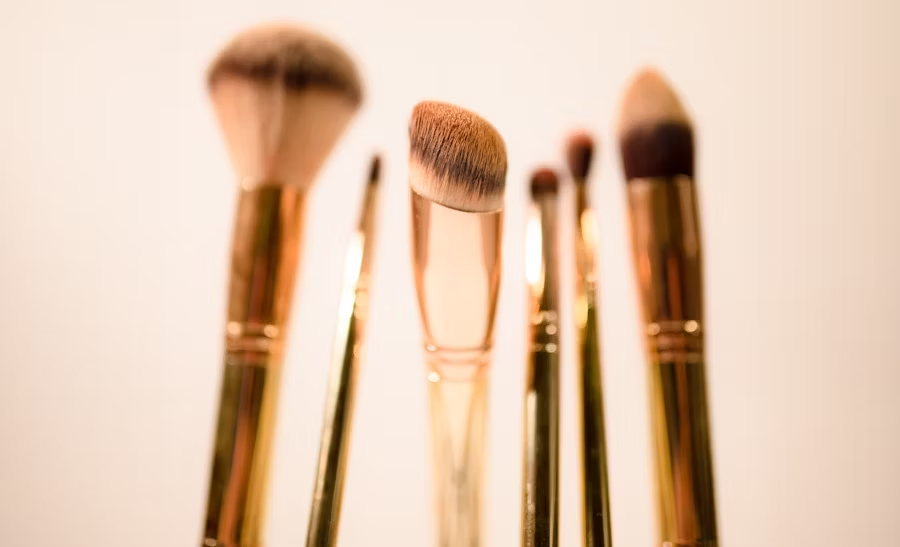
Private label makeup brushes are sold under the buyer’s brand and often begin with existing supplier designs. The available customization, exclusivity, Werkzeuge, and design ownership depend on the manufacturer’s program and the sourcing agreement.
Define Design Ownership and Exclusivity
In many private label programs, brands select an existing brush design and customize its visible features. The following points should be confirmed before sampling or production begins.
| Commercial Area | Typical Arrangement | What the Brand Should Confirm |
|---|---|---|
| Core brush design | The supplier may offer the same catalog design to multiple brands. | Whether the selected shape, Konstruktion, or material combination is shared with other buyers |
| Brand assets | The brand normally retains ownership of its logos, trademarks, and supplied artwork. | How brand assets may be used, stored, reproduced, and protected |
| Design and tooling rights | Ownership depends on who created and paid for the design or tooling and what the contract states. | Ownership, usage rights, maintenance responsibility, and access after the relationship ends |
| Exclusivity | Product or territorial exclusivity is not automatic and may require higher volumes, fees, or a separate agreement. | Produkte, markets, sales channels, duration, minimum orders, and enforcement terms covered |
| Sourcing brief | The brief records the approved product, Branding, Verpackung, and quality requirements. | Whether the approved brief and samples are incorporated into the purchase agreement |
What You Can Customize in a Private Label Arrangement
The exact customization range varies by supplier. Private label programs commonly allow brands to modify visible and market-facing elements without developing an entirely new brush structure.
| Customization Area | Common Options and Limitations |
|---|---|
| Branding | Logo, brand name, placement, Größe, and available application methods such as printing, foil stamping, or laser engraving |
| Colors and finishes | Handle and ferrule colors, Pantone matching, matte or gloss coatings, soft-touch finishes, and available metallic finishes, subject to process and MOQ requirements |
| Brush fibers | Available fiber types or blends compatible with the selected brush design and its intended application performance |
| Set composition | Selection of face and eye brushes from the supplier’s catalog, together with custom product names or numbering |
| Verpackung | Boxes, pouches, travel cases, inserts, artwork, paper stocks, and finishes, subject to packaging MOQ and tooling requirements |
Changes to brush-head geometry, ferrule dimensions, handle construction, or other core structural features may require custom development and new tooling. Staying within an existing private label platform generally reduces development time, technical risk, and upfront investment.
To see the exact design baselines and handle finishes available for your line, browse our full catalog of proprietary wholesale makeup brush sets.
Customization Depth Compared Side by Side
White label offers fast, cost-effective entry with fixed designs. Private label allows deep customization, unique product performance, and strong brand differentiation.
Part 1: The Customization Matrix: What You Can Modify
When evaluating a makeup brush manufacturer, customization usually ranges from surface-level branding to fully custom product development. The right level depends on the brand’s differentiation goals, launch schedule, Budget, and order volume.
For growth-stage brands, a middle option—often described as semi-custom private label—can provide stronger visual differentiation without requiring new brush-head engineering. This is an operational sourcing term rather than a standardized industry category, so the exact scope should be confirmed with the manufacturer.
Tier 1: Semi-Custom Private Label for Faster Scaling
In this model, brands typically retain an existing brush-head design and approved fiber specification while customizing selected handles, Aderendhülsen, Branding, set composition, und Verpackung. Available options remain subject to existing tooling, process compatibility, Mindestbestellmenge, and testing requirements.
| Customization Area | Common Options | What to Confirm |
|---|---|---|
| Colors and finishes | Pantone-matched handle colors, metallic ferrule finishes, matte or gloss coatings, and soft-touch surfaces | Color tolerance, finish durability, sample approval, and minimum order requirements |
| Handle materials | Available wood, Bambus, Plastik, resin, or weighted-handle options compatible with existing designs | Tooling compatibility, material documentation, Gewicht, Gleichgewicht, lead time, and added cost |
| Branding | Logo printing, laser engraving, foil stamping, brush names, and numbering systems | Compatible application methods, printable area, artwork format, Haltbarkeit, and positioning tolerance |
| Set composition | Selection of compatible face and eye brushes from the supplier’s existing range | Brush availability, set-level MOQ, consistent finishes, and whether the combination is exclusive |
| Verpackung | Rigid boxes, folding cartons, pouches, travel cases, inserts, artwork, and surface finishes | Packaging MOQ, tooling charges, product fit, labeling requirements, and shipping protection |
This approach can shorten development time and reduce tooling costs compared with a fully custom brush program. Jedoch, brands should confirm every available option through samples, written specifications, and the final manufacturing agreement before production.
Tier 2: Full OEM/ODM Customization (From-Scratch Engineering)
For established market leaders looking to invest heavily in intellectual property, full customization moves past structural aesthetics into fundamental chemical and mechanical engineering.
This involves developing brand-specific bio-mimetic synthetic fibers with targeted diameter crimping, or opening completely new industrial molds for proprietary ergonomic handle shapes and custom ferrule dimensions. This path yields maximum differentiation but requires extensive product development cycles.
If you are looking to fully engineer your own proprietary tool from scratch, you will need to understand the deeper logistics of factory production lines; learn more in our comprehensive guide on OEM vs. ODM Make-up-Pinsel: Welches Modell das richtige für Ihr Unternehmen ist?
Part 2: Commercial Benchmarks: Sourcing Metrics Breakdown
To successfully plan your product launch, it is essential to analyze how these two distinct private label models perform against key manufacturing KPIs.
Understanding these operational baselines helps clarify why keeping the brush heads standard while customizing the exterior components offers the highest return on investment for emerging cosmetic brands.
Mindestbestellmenge (Mindestbestellmenge) Requirements
The minimum order volume for private label brush sets fluctuates heavily based on the tooling involved.
Under a Tier 1 Semi-Custom arrangement, MOQs are highly accessible, generally starting from 50 Zu 500 sets per style. Because the factory does not need to recalibrate its hair-tying machinery or source non-standard bristles, they can accept smaller runs, which significantly limits your upfront inventory exposure.
Umgekehrt, Tier 2 Full OEM projects usually require higher MOQs, especially when new molds, custom fibers, or tooling are involved.
Wholesale Cost Per Set and Budgets
Your manufacturing tier directly dictates your unit economics and overall capital allocation. Once you choose your sourcing model, you must evaluate the total capital required to get your business off the ground.
Semi-custom private label brushes usually range from $1.50 Zu $5.00 per set, allowing brands to benefit from volume pricing achieved through mass-produced catalog brush heads. A reliable first-launch budget for a semi-custom line ranges between $2,500 Und $5,000.
On the other end of the spectrum, from-scratch custom-made brushes typically cost $5.00 Zu $15.00+ per set. A full OEM launch budget can easily escalate to a range of $7,500 Zu $26,600 oder mehr, which excludes the separate, non-refundable molding and compliance testing fees required for bespoke product shapes. To map out your complete financial plan beyond just the manufacturing costs, read our full Aufschlüsselung der Gründungskosten einer Make-up-Pinsel-Marke: Was Sie tatsächlich ausgeben werden.
Development Lead Time and Market Fit
Time-to-market is a critical competitive metric in the fast-paced beauty industry.
Simple semi-custom projects may be completed within several weeks after artwork approval. This rapid turnaround is perfect for capturing fleeting seasonal aesthetics or rolling out influencer collaborations with minimal delay.
Full OEM custom brush development requires a timeline of 4 Zu 12 weeks for production alone. This extended window is consumed by multiple rounds of 3D prototyping, counter-sampling, and rigid quality testing for shedding and glue adhesion.
Letztlich, while full custom engineering suits established cosmetic houses launching flagship tools, the semi-custom route remains the for growth brands prioritizing fast stock rotation and optimized cash flow.
Cost and MOQ Compared
White label brushes often cost more per unit due to middleman margins and lower economies of scale. Private label typically reduces per-unit costs with higher order volumes.
Per-unit pricing difference and why white label can cost more per unit
The cost per unit for makeup brushes shows a clear split between white label and private label. White label products are generic and pre-made. You buy them in bulk from traders or distributors and then resell them, usually with minimal branding.
Private label brushes are manufactured specifically for your brand. That means custom logos, Verpackung, and sometimes even design modifications.
Here are the main reasons why white label can have higher per-unit costs:
- Trader or Middleman Margins: White label brushes often come from traders, not directly from factories. That middleman adds their margin, increasing your per-brush cost.
- No Economies of Scale: You buy white label from existing stock. You are not funding a large production run. This means the manufacturer does not offer the deep volume discounts you get with private label. Private label spreads setup, Werkzeuge, and quality control costs over more units, which drives down the per-unit price at scale.
- Finished Goods Convenience: White label is ready-to-ship. You pay a premium for avoiding design work, development cycles, and longer lead times. This convenience gets built into a higher per-unit wholesale price.
- Less Material Control: With white label, you pick from fixed SKUs. Material choice and quality levels are predetermined, limiting your ability to optimize costs. Private label lets you choose materials (entry-level synthetic, high-end, professional) with a specific cost framework.
Zum Beispiel, a private label brush set that costs around $10 wholesale can retail for $25-$30. That gives good margins. White label brushes have attractive retail margins, but their wholesale cost per brush is less flexible with quantity compared to OEM private label.
MOQ ranges for each model in the brush category
Mindestbestellmengen (MOQs) vary widely for makeup brushes. Some suppliers accept as few as 50 Einheiten pro Design, others require 500 oder mehr. Many private label suppliers offer tiered pricing, meaning higher MOQs lead to better unit pricing.
White label models have these MOQ characteristics:
- MOQs are typically lower than full private label. Products are already made and stored, so the supplier carries less risk per order.
- You can often mix different SKUs from existing stock.
- MOQs generally fall between 50 Und 100 units per design or set. This makes white label great for testing markets or new channels with less capital and inventory risk.
- The lower MOQ directly links to that higher per-unit cost. The supplier makes up for lower volume through pricing.
Private label brush lines follow a different MOQ structure:
- Small-batch private label projects, often with budgets around $3,000-$5,000, typically have MOQs in the hundreds of units per design or set.
- Some OEM suppliers offer MOQs as low as 50 Einheiten pro Design, especially for existing molds with only logo/packaging customization. This is an exception and comes with a per-unit price premium.
- Factories usually ask for 200-500 units per brush set design. This volume justifies custom logo printing, material procurement, and specific setup and quality control.
- Private label suppliers openly promote tiered pricing. Cost and MOQ are part of a negotiated package.
Letztlich, white label works for low risk and fast market entry, accepting a higher unit cost. Private label optimizes cost and margin when you can commit to MOQs in the hundreds per SKU, embracing a higher upfront investment for a lower per-unit cost.
Time-to-Market: Which Gets You Selling Faster?
White label gets products to market in days. Private label demands weeks or months for full customization and development.
White label timeline
White label brushes get you selling fast, usually within days to a few weeks. The products are already made and tested. Your work focuses on branding, like adding your logo to the handle or designing outer packaging. Some suppliers report that white label brush sets can ship in 1-3 weeks once you finalize your branding artwork. Basically, you are rebranding an existing item, not developing a new one from scratch.
Private label development timeline
Private label projects take longer, often weeks to months. This is because you get to make more product decisions. You review samples and fine-tune specifications before production starts. A basic private label brush order might take 2-4 Wochen. More complex custom brush sets, involving unique designs or materials, can easily extend to 4-12 Wochen, and that is just for production after design approval and prototyping. You are building a custom product, and that process needs time for development, Testen, and approvals.
Exclusivity and Brand Differentiation
White label products risk high overlap and price competition. Private label builds unique product identity, giving you stronger brand differentiation and exclusivity.
Exclusivity and Brand Differentiation
The Competitor Overlap Risk in White Label Sourcing
The primary trade-off for the speed of white label sourcing is the immediate risk of market saturation. Because white label products are sold openly to any purchasing brand, it is highly common for immediate competitors to launch the exact same Pinselsets, differing only by a stamped logo.
This low barrier to entry is driving massive volume, with the global white label cosmetics market projected to reach $1.57 Milliarden von 2030, making physical product overlap almost inevitable for basic sourcing models.
This structural overlap shifts the consumer buying behavior away from Markenwert and directly into a price war. When the product is a commodity, shoppers compare similar options strictly on wholesale cost.
Under a pure white label model, your differentiation is bottlenecked. It forces you to rely entirely on superficial marketing levers—like product photography, creative naming, and ad copy—while the physical tools offer zero unique tangible value.
While this setup offers an undeniable entry advantage in terms of upfront cash flow, it also means agile competitors can duplicate your entire product line almost overnight.
How Private Label Safeguards Your Brand Equity
Upgrading to a private label model allows brands to move past superficial rebranding and establish a defensible product identity. By collaborating with a dedicated Make -up -Bürstenhersteller on tailored hardware adjustments, you build a barrier against direct product duplication.
Even when utilizing a factory’s standard, pre-tested bristle structures, true private label parameters allow you to shield your collection from competitor overlap through strategic, product-level differentiation:
- Proprietary Curations: Instead of buying off-the-shelf bundles that any brand can source, you can hand-pick specific individual brush shapes to engineer a highly specialized, intent-driven assortment that serves a unique niche.
- Signature Hardware Configurations: By matching custom Pantone colors to wood or resin handles and pairing them with coordinated metallic ferrules (such as matte gunmetal or brushed rose gold), you create an aesthetic baseline that cannot be cross-referenced in a generic supplier catalog.
- Cohesive Range Ecosystems: Private label enables you to apply consistent alphanumeric naming systems and functional typography directly onto the handles. This creates an ecosystem of tools that looks and feels like proprietary salon-grade hardware.
Letztlich, this structural control moves your brand out of the low-margin commodity race. It ensures your audience evaluates your Pinselsets based on cohesive design and tactile rather than just a different box.
When White Label Makes Strategic Sense
White label makeup brushes are smart when you need speed, low risk, and easy expansion, especially for testing demand or quick seasonal releases.
Testing demand before investing in full development
White label brushes are built for testing the market with minimal commitment. The brushes are already made, so you only need to brand and label them. This means launch timelines shrink to days or weeks. You can also order with very low minimums, sometimes just a single unit, which cuts entry risk significantly.
You also save money upfront. There is no need to spend on brush design, ferrule engineering, or hair blend development. Stattdessen, you focus capital on your brand, Fotografie, content, and advertising.
This model lets you discover what your audience wants without heavy investment:
- You can validate core questions: Do customers prefer synthetic or mixed bristles? Are they more interested in 7-piece eye sets or 10-piece face+eye sets?
- It makes channel testing easy. You can list across various platforms to see where sales and reviews are strongest.
- You can refine your product positioning. White label helps you figure out if your audience is entry-level, quality-focused, or professional.
- White label sales can fund your future private label line. It is a bridge strategy.
Brands use white label to collect data about their audience at a fraction of the cost of a custom-engineered brush line. This involves a few testing patterns:
- Start with a few core sets, then watch their sales, review quality, and return rates.
- Test different handle colors, small logo changes, or packaging layouts to see what resonates.
- Test different set sizes and price points. See if customers prefer complete kits or minimal essentials.
- Gather reviews on shedding, bristle feel, and handle comfort. Use this feedback for future private label designs.
Fast seasonal or promotional SKUs
White label is good for short-lived, time-bound, or trend-driven brush items. Hier, quick delivery and managing limited quantities matter more than deep customization.
Seasonal collections and holiday sets benefit from white label production:
- Production times are short, often weeks. This is key for holiday drops or collaborations where timing is everything.
- Small MOQs reduce the risk of overstocking if a seasonal theme does not hit big.
- You can add perceived value through themed packaging and branding, even with standard brush compositions.
This model also works well for promotional, Zusammenarbeit, and trial products:
- Quick co-branded sets for influencers or artists avoid longer development times.
- White label brushes provide instant inventory for event giveaways or pop-up shop promotions.
- They can be supporting promotional SKUs, increasing basket size for your main products.
To get the most from seasonal or promotional white label brushes, remember a few things:
- Prioritize reliable suppliers with good quality control for these short-term items.
- Focus your efforts on quick branding and compelling storytelling.
- Control your margins by bundling brushes with higher-margin hero products or digital content.
The Upgrade Path: Moving from White Label to Private Label
Upgrading from white label to private label builds stronger brand identity, product exclusivity, and higher margins for makeup brushes.
| Aspekt | White Label Customization Ceiling | Private Label Customization Range |
|---|---|---|
| Product design (Form & build) | Fixed catalog designs; choose existing shapes and sizes only. | You can alter head shapes, densities, Aderendhülsen, Griffe, and overall ergonomics. |
| Fibers and materials | Pre-set bristle materials and ferrule/handle options. | You select and engineer fibers, Materialien, and performance characteristics. |
| Color and finish | Limited color choices on standard handles/ferrules. | Full custom color systems, endet, and special effects are possible. |
| Branding on handle | Logo placement and print in predefined zones and methods. | You get fully customized logo size, placement, treatment, and multi-branding schemes. |
| Verpackung | Standard structures with custom print and simple branding. | You can have fully bespoke packaging structures, Materialien, and luxury presentations. |
| Performance tuning | Inherent to the standard model; not brand-specific. | Fiber engineering, density and cut tuning, and brand-specific performance specs are available. |
| Mindestbestellmenge | Lower entry, typically 50–500 units per style or set. | Ranges from 50 Einheiten (simple) Zu 5,000+ per custom reference for full OEM/ODM. |
| Cost per set | About $1.50–$5 per set. | About $5–$15+ per set for custom designs. |
| Example 500-set budget | ~ $2,500–$3,000 total. | ~ $7,500–$10,000 total for similar quantity. |
| Development time | 1–3 weeks after branding finalization. | 4–12 weeks for custom designs, plus design and sampling phases. |
| Differentiation potential | Mainly visual branding and pricing; product often shared across brands. | Deep functional and aesthetic differentiation at product and system level. |
Strategic Considerations for Private Label Transition
Upgrading from white label to private label is a watershed moment for a beauty brand. While the reward is exclusive market positioning and higher equity, the transition requires careful financial and operational calculation.
Before leaping, brands must balance the competitive advantages against the inherent supply chain risks.
1. Drivers of the Upgrade: Why Brands Make the Leap
- True Market Exclusivity: White label leaves you vulnerable to price wars with competitors selling the exact same brush shapes. Private label builds an uncopyable product identity through custom-engineered aesthetics and bespoke set configurations.
- Granular Quality & Performance Control: Moving to private label means you control the performance details. You dictate the ferrule metal (z.B., copper vs. Aluminium), handle ergonomics, lacquer durability, and glue anti-shedding standards. This allows you to tune tools for specific professional application styles, like HD airbrushed finishes or heavy cream cosmetics.
- Margin Expansion & Premium Positioning: Generic brushes cap your retail price. Bespoke hardware modifications combined with elevated packaging justify luxury tier pricing, significantly widening your net profit margins.
2. Risk Mitigation: Navigating the Financial and Operational Toll
The transition from standard white label to full OEM private label can triple your total order spend for the same quantity. Zum Beispiel, a 500-set run can jump from $2,500–$3,000 (white label) Zu $7,500–$10,000 (fully custom).
To protect your cash flow, implement these de-risking strategies:
The Semi-Custom Bridge: To avoid high inventory exposure, use a semi-custom stage as a live-market test. Keep the factory’s pre-tested bristle formulas fixed, but customize the handle colors and packaging. This limits upfront tooling fees while assessing customer price tolerance.
Contractual Protection: As product customization increases, your reliance on a specific factory deepens. Protect your brand with strict Non-Disclosure Agreements (NDAs) and clear manufacturing contracts covering tooling ownership, exclusivity rights, guaranteed defect rates, and penalty-backed lead times.
Einhaltung & Material Safety: Ensure your manufacturing partner provides full safety documentation (z.B., Reach, Prop 65 Einhaltung) for all custom lacquers, Klebstoffe, and synthetic fibers.
Operational Plan for Implementing Private Label
For mid-stage beauty brands, the most cost-effective scaling strategy is Semi-Custom Private Label. By keeping the core bristle material and head shapes fixed (leveraging the factory’s pre-tested, high-performance synthetic fiber formulas), you eliminate heavy research and development fees. Stattdessen, you channel your budget into modifying aesthetic and structural components to create a completely proprietary brand look.
Here is your step-by-step operational plan to implement this blueprint with your manufacturing partner:
Schritt 1: Lock in Your Core Brush Heads (The Performance Base)
- Select the Catalog Archetype: Choose from the manufacturer’s existing, high-performing collections (z.B., a standard 7-piece face set or 5-piece precision eye set).
- Audit the Fiber Mechanics: Since you are not altering the hair material or density, rely on the factory’s existing compliance charts (such as Cruelty-Free and Vegan certifications) for these specific fibers. This guarantees immediate regulatory approval for global markets like the US and EU.
Schritt 2: Engineer the Aesthetic Hardware (Griffe & Aderendhülsen)
- Bespoke Handle Geometry & Gewicht: While keeping the bristles stock, you can completely change the handle. Request a change in wood type (z.B., sustainably sourced FSC birch wood), adjust the ergonomic weight balance, or switch to eco-friendly biodegradable PLA plastics.
- Pantone Color Systems & Special Finishes: Move away from standard black or white. Specify custom Pantone colors for the handles. Upgrade the finish to premium soft-touch rubberized coatings, matte anti-scratch lacquers, or high-gloss pearlized effects.
- Ferrule Metallization: Customize the aluminum or copper ferrules (the metal baseline holding the hair). Match your brand identity by requesting specialized plating techniques: rose gold, gunmetal gray, matt schwarz, or brushed chrome.
Schritt 3: Apply Advanced Branding Treatments
- Multi-Zone Logo Placement: Do not settle for simple standard printing. Request 360-degree laser engraving on the ferrule, or deep hot-stamping with metallic foils on the handle base.
- Functional Nomenclature: Add alphanumeric codes or function names (z.B., “F01 – Flawless Foundation”) directly onto the handles. This enhances the professional artistry feel and mimics premium retail setups.
Schritt 4: Curate Proprietary Assortments & Verpackung
Fully Bespoke Primary & Sekundärverpackung: Design custom-molded EVA travel pouches, cylindrical leather brush holders, or luxury rigid gift boxes with custom paperboard inserts. Your packaging is where 80% of your perceived brand premium will be generated.
Mix-and-Match Bundling: Break the supplier’s standard catalog sets. Combine an eye-shading brush from Catalog A with a contour brush from Catalog B to create a completely unique solution tailored to your target audience.
Letzte Gedanken
Deciding between white label and private label is not just about cost—it is about scalability. White label gets you into the market tomorrow; private label builds an asset you can eventually sell or retail in global chains. If you want a unique product identity without the million-dollar R&D price tag, Die Semi-Custom Private Label route.
Ready to Develop Your Next Makeup Brush Collection?
At BS-Mall, we operate vertical manufacturing facilities that streamline the semi-custom private label pipeline. We handle the technical fiber engineering so you can focus on building your brand equity.
- Turnkey Packaging Design Services
- Low MOQs on Semi-Custom Tooling
- Full Pantone Matching & Eco-friendly Hardware Options
Ready to define your brush strategy for real market impact? Let’s discuss your specific brand vision and current business stage. We can help you navigate these options, ensuring your next product launch maximizes both speed and differentiation.