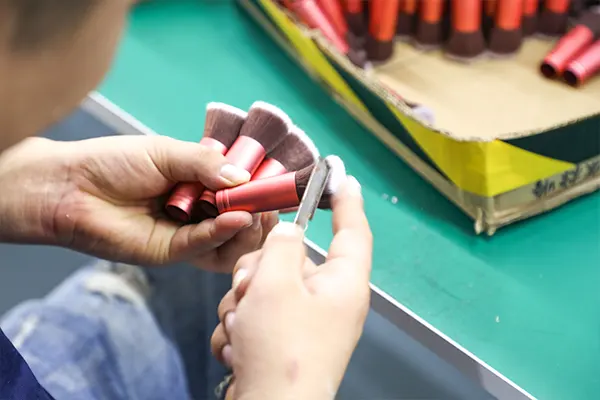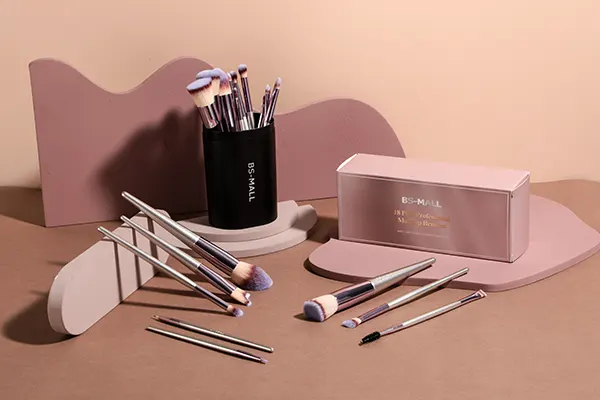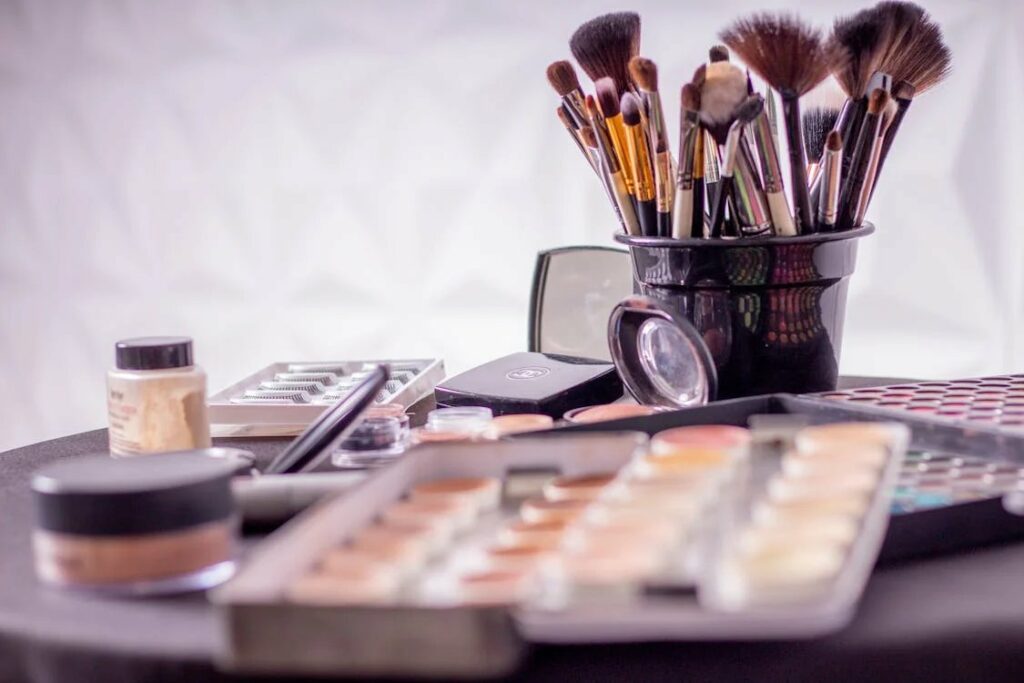


Choosing the right private label makeup brush supplier is one of the most important decisions for Amazon FBA sellers. Product quality, options de personnalisation, production costs, and packaging design directly affect your listing performance and long-term profitability. In a crowded makeup brush market, many sellers struggle to maintain margins when their products have little differentiation. A well-designed private label strategy can help brands compete beyond price.
To insulate your beauty brand from price compression, this guide explains the key manufacturing factors, compliance considerations, and FBA logistics requirements sellers should evaluate before sourcing, regulatory compliance frameworks, and FBA logistics metrics required to secure 55–65% gross margins and build a defensible product portfolio.
Le 5 Catégories de pinceaux avec le meilleur potentiel de marge Expédié par Amazon
Aperçu de la comparaison rapide
To maximize portfolio efficiency, procurement teams must avoid generic commodity sets and focus on targeted configurations that command higher perceived value while maintaining optimized Cost of Goods Sold (COGS).
The table below provides a strategic blueprint of the five highest-yielding brush categories engineered for the Amazon FBA ecosystem:
| Product Category | Strategic Classification | Target Margin Profile | Primary Operational Objective |
|---|---|---|---|
|
Ensembles de voyage (5–8 Piece + Pouch) |
Valeur perçue élevée | 55% – 65% Gross Margin | Targets premium gift-buyers and travelers; the accessory pouch justifies higher retail price ceilings. |
|
Pinceaux à double extrémité |
Visual Product Differentiation | 50% – 60% Gross Margin | Maximizes Search Click-Through Rates (CTR) and cuts customer acquisition costs via “2-en-1” positioning. |
|
Fondation & Concealer Singles |
High-Frequency Consumable | 60% – 68% Gross Margin | Drives consistent repurchase cycles (1–4 months) and scales Customer Lifetime Value (LTV). |
|
Végétalien & Eco-Certified Sets |
Conformité & Brand Equity | 58% – 65% Gross Margin | Leverages verifiable ESG certifications to attract premium, values-driven consumer segments. |
|
Ensembles de démarrage pour débutants |
High-Volume Entry Tier | 35% – 45% Gross Margin | Serves as a high-velocity acquisition tool to harvest reviews and boost organic store authority. |
Resilient Demand Analysis: Market Dynamics by Brush Sub-Category
Dans 2026, makeup brushes remain a highly attractive Amazon FBA asset class because they represent essential functional tools with year-round demand insulation, completely detached from seasonal color cosmetic trends. Their lightweight, compact physical profile minimizes inbound ocean freight costs and maximizes FBA storage volume efficiency.
Understanding where structural supply chain gaps exist—versus over-saturated commodity brackets—is critical for portfolio architecture:
- Fondation & Pinceaux Kabuki: High-volume traffic anchors. While single-item competition is dense, premium dense-fiber variations sustain 55–65% gross margins and serve as the core customer acquisition engine for sets.
- Correcteur & Pinceaux de détail: High-margin operational drivers. These components carry minimal incremental production costs but disproportionately lift the perceived value and retail ceiling of a bundled kit.
- Poudre, Rougir & Pinceaux de contour: Premium structural face tools. These larger-profile hero products carry the highest per-unit price ceilings and reliably deliver 55–65% margins.
- Fard à paupières & Pinceaux estompeurs: Ultra-low unit cost assets. Perfect for assembling niche, high-margin eye kits (3–7 pièces) or expanding piece counts in larger sets to optimize marginal returns.
Where Amazon Makeup Brush Brands Face Competition
Operators must avoid the commodity trap: the market for low-tier, unbranded 15–30+ piece synthetic sets priced between $9.99 et $15.99 is over-saturated, triggering destructive PPC ad spend wars.
Inversement, clear strategic gaps exist for tightly curated, kits milieu de gamme (4–8 essential tools) anchored by verifiable safety compliance and niche targeting. Leading your visual merchandising with technical compliance parameters like “MoCRA-adjacent ready” ou “dermatologically audited” builds instant enterprise trust. En outre, targeting long-tail, high-intent keywords—such as “cream bronzer buffing brush” ou “under-eye setting tool”—allows brands to bypass high-volume competition and convert high-intent buyers immediately.
Custom Premium Private Label Makeup Brushes

Manufacturing Considerations for Different Makeup Brush Categories
1. Ensembles de voyage (5–8 pièces avec pochette): Gifting and Utility Demand
Compact travel sets represent a dual-engine revenue opportunity, capturing seasonal gift-buying waves and year-round functional utility demand. The inclusion of a coordinated travel pouch transforms loose components into a self-contained premium kit, shifting the product classification from a commodity tool to an affordable luxury gift.
To convert gift-buying traffic, the visual merchandising must highlight cohesive aesthetic execution—such as custom Pantone-matched rose gold or matte pastel palettes—alongside clear ethical declarations (par ex., 100% poils synthétiques végétaliens).
From a functional standpoint, these tools must prioritize multi-purpose design. Par exemple, an engineered angled face brush must handle both cream contour and powder blush application, allowing the user to execute a complete look with fewer physical inputs. While handle lengths are truncated to fit standard travel dimensions, the factory must maintain standard head density and balanced handle weight to ensure the brush retains an ergonomic, salon-quality feel rather than a cheap, toy-like alternative.
2. Fond de teint et correcteur simples: Evergreen High-Repurchase Category
Complexion tools represent the primary strategic stabilizer in a beauty tool catalog. Unlike specialized eyeshadow brushes, foundation and concealer applications are core components of daily beauty routines, driving consistent, year-round sales velocity insulated from macroeconomic shifts.
Some consumers replace frequently due to hygiene concerns and product buildup, especially for frequently used complexion brushes. This frequent consumption pattern generates a reliable, recurring revenue stream that complements the more durable, long-term replacement cycle of multi-piece sets, substantially scaling customer Lifetime Value (LTV).
Strategically, introducing complexion singles into a brush-focused FBA catalog creates a consumable anchor. This structural positioning opens natural cross-selling lanes: operators can pair specific foundation formulations with the exact custom-engineered blending tools from their line, increasing Average Order Value (AOV).
En outre, this allows brands to deploy technical, tutorial-driven content that establishes the company as a category authority. Instead of operating as a simple hardware importer, the brand becomes a trusted advisor for achieving a flawless finish from start to finish.
3. Coffrets Vegan et Eco-Certifiés: Growing Compliance-Driven Demand
As global marketplaces and consumers increasingly expect brands to provide clearer information about material and sustainability claims. Environmental, Social, and Governance (ESG) compliance has shifted from an optional marketing angle to a strict listing security requirement.
True vegan certification requires that 100% of the bristle array consists of engineered synthetic monofilaments (par ex., advanced PBT or BASF wave fibers) instead of animal hair. En outre, the specialized adhesives and binding resins used inside the ferrule housing must be verified completely free of animal-derived components.
To support eco-certifications, materials must be traceable up the supply chain. Handles must carry official Forest Stewardship Council (FSC) chain-of-custody documentation, proving the timber originates from responsibly managed, sustainable forests. Modern enterprise buyers verify these credentials directly through the FSC Certification Database to ensure their complete supply chain alignment.
De vagues affirmations comme “écologique” represent a serious legal and operational liability on Amazon; modern operators drive conversions by showcasing verifiable, audit-ready data points like “packaged in FSC-certified paperboard” to bypass automated compliance flags and build authentic buyer trust.
4. Ensembles de démarrage pour débutants: Entry-Tier Volume Category
Beginner kits represent a high-velocity customer acquisition asset designed for market penetration rather than maximum per-unit profitability. By engineering an accessible, comprehensive entry-level kit, brands can drive high sales volumes, accelerate product review accumulation, and establish broad indexing authority that lifts the organic ranking of the entire brand catalog.
The standard configuration consists of 5 à 12 pinceaux, providing all the basic tools required for an entry-level cosmetic routine. To balance production costs with baseline performance, these sets utilize cost-efficient synthetic fibers like standard nylon or taklon, which adapt well to liquid, crème, and powder mediums. These arrays are paired with simple lightweight wood or molded plastic handles and standard aluminum ferrules to keep production costs highly competitive.
This manufacturing efficiency keeps landed COGS exceptionally low—often under $8.00 FOB for an 11-piece set. This optimized cost structure allows brands to price aggressively on Amazon within the $9.99 à $19.99 retail band. This price positioning targets broad, high-volume search phrases like “makeup starter kit” ou “basic brush set,” capturing casual users and beginners who want an all-in-one solution.
To mitigate market risks, procurement teams should negotiate flexible supplier terms, securing initial pilot runs of 300 à 500 units to test configuration performance before committing capital to massive bulk runs.
Comment différencier votre annonce au-delà du prix
To break out of commodity price competition, operators must execute physical product customization. The table below details the strategic choices between Custom Offer Architecture and Specification Upgrades to lift the product’s retail price ceiling:
The Custom OEM Process: Des codes Pantone aux échantillons finaux
Moving from standard supplier catalogs to a proprietary product requires precise technical communication with your manufacturer. Brands must provide exact Pantone Matching System (PMS) color codes for both the handle substrates and the metallic ferrules. This standard industrial nomenclature eliminates visual ambiguity and ensures color consistency across different production lots.
Every custom project must be governed by an explicit Bill of Materials (Nomenclature) submitted to the factory floor. The BOM must formally specify the handle raw material (par ex., birch wood, bambou, or molded resin), the technical fiber configuration (par ex., wave-type synthetic PBT, micrometer thickness), the precise ferrule thickness, and the exact dimensions of every tool in the set.
Before releasing capital for a full production run, operators must require and formally sign off on a physical Pre-Production Sample (PPS). The PPS represents the definitive quality benchmark for bulk production; verifying color accuracy, logo durability, and packaging tolerances on a physical sample is the only reliable safeguard against high customer return rates and quality disputes.
High-Impact Upgrades vs. Low-ROI Structural Waste
Not all component modifications yield equal financial returns. Operators must prioritize visible, high-impact tactical upgrades that buyers notice immediately. Upgrading exterior packaging from a generic polybag to a rigid, high-density gift box instantly signals a premium product. This simple packaging change allows a product to break out of the crowded $12–$15 price band and command an $18–$25 retail price point.
De la même manière, increasing bristle density directly addresses the primary cause of negative 1-star reviews on Amazon: streaky application and shedding fibers. Upgrading to high-density, non-shedding synthetic fibers supports a retail shift into the $15.99–$21.99 tier and protects your organic ranking over time.
Inversement, invisible or bulk-increasing changes erode profitability. Adding internal handle weights improves tactile balance, but if the packaging box is unnecessarily bulky, it can increase your dimensional volume and trigger higher shipping fees. This extra cost can easily wipe out the margin gains from the upgrade.
Likewise, adding a generic brush shape to an already saturated 20-piece configuration rarely provides enough true differentiation to justify the extra production costs.
Logistics Engineering: Exigences d'emballage Expédié par Amazon & Tier Optimization
A major financial vulnerability for beauty tool brands is deploying retail packaging that incurs dimensional weight penalties within Amazon’s fulfillment centers. Amazon FBA fees consider factors such as package dimensions and shipping weight. Oversized packaging can increase fulfillment costs for lightweight products. Bulky packaging can quickly wipe out product margins.
If the calculated dimensional volume exceeds the actual physical weight of the item, Amazon bases its fulfillment and storage fees entirely on that larger volume. For lightweight items like makeup brushes, oversized packaging can inadvertently push a product from a Standard-Size tier into a more expensive Large Standard or Oversize tier, significantly increasing per-unit fulfillment costs.
OEM Packaging and FBA Shipping Considerations
To protect unit margins, packaging parameters must be locked in during the initial Specification Freeze with the manufacturer:
Regulatory Compliance and Documentation Requirements
Operating a secure Amazon FBA brand requires continuous compliance monitoring. Amazon’s compliance algorithms routinely flag beauty tools that make unsubstantiated ethical or material claims. Brands must maintain verified supply chain documentation to protect listings from unexpected suspension.
1. Justification des allégations végétaliennes et sans cruauté envers les animaux
If a listing highlights terms like “100% Végétalien” ou “Cruelty-Free,” the operator must have supporting documentation ready from the manufacturer. This includes formal supplier declarations confirming that no animal-derived raw materials, processing aids, or animal glues are used anywhere in the product assembly.
En outre, the factory must provide signed statements certifying that no animal testing is conducted at any stage of the material lifecycle. While not strictly mandatory for initial listing creation, securing formal third-party certifications from recognized organizations like PETA or Leaping Bunny simplifies the compliance process and protects your brand from competitor compliance challenges.
2. Documentation sur la sécurité des matériaux
Because finished makeup brushes are non-chemical, non-electrical hardware items, they are generally classified as non-hazardous articles. This means Amazon typically does not require a full Safety Data Sheet (FDS) for standard brush distributions. Plutôt, operators should maintain comprehensive component material declarations from their suppliers. These documents break down the exact chemical composition of the synthetic filaments, revêtements de poignées, and ferrule treatments, verifying they are free from restricted heavy metals and safe for direct skin contact.
Critical Compliance Note: A formal dangerous goods review will be triggered if you choose to bundle your brush sets with liquids, aerosols, or electronic components—such as liquid brush cleansers, alcohol-based sanitizing sprays, or battery-powered deep-cleaning tools. In these instances, you must upload a verified SDS or an official Hazmat Exemption Sheet to prevent Amazon from blocking your inventory at the inbound receiving dock.
Stratégie d'approvisionnement: Pilot Launch Controls and Validation
Launching a new private label SKU without empirical market validation introduces unnecessary operational risk. Many suppliers can support smaller trial orders before full-scale production, depending on customization requirements. This volume allows the factory to spread setup and tooling costs efficiently, bringing the per-unit cost down to a level that is economically viable for the competitive Amazon marketplace.
Crucially, a 500-unit initial run provides a critical inventory buffer: it covers the sales velocity needed for initial launch promotions and early review acquisition campaigns while leaving enough safety stock to remain active during the 60-to-90 day production lead time for a second manufacturing run. Smaller test batches simply fail to provide the historical data needed to evaluate true customer acquisition costs, conversion rates, and return behavior.
Verification Protocol: Tactile Quality Control & Atténuation des risques
Before authorizing mass production, a physical Pre-Production Sample (PPS) must undergo hands-on testing. Makeup brushes are highly tactile tools, and their real-world performance cannot be accurately judged from digital renderings or factory photographs.
The physical sample must be evaluated across three critical quality nodes:
- Tactile Performance Validation: Verify bristle softness, fiber density, and picking capability. Poor fiber quality leads to streaky makeup application, driving down customer satisfaction and generating immediate negative reviews.
- Structural Construction Auditing: Run mechanical tension tests to check the ferrule-to-handle connection. Loose ferrules, unbalanced handle ergonomics, and structural shedding are common manufacturing defects that can ruin a product launch.
- Olfactory Screening: Inspect the sample for strong chemical odors caused by low-grade adhesives, raw industrial paints, or curing compounds. Chemical smells are an immediate red flag for consumers, leading to high return rates and poor reviews.
By running these quality checks on physical samples before full-scale manufacturing, brands can fix performance defects, optimize packaging dimensions, and protect their product launch from day one. To systematically audit factory capabilities and eliminate pre-shipment risks, cross-border e-commerce brands should benchmark their procurement workflows against a professional makeup brush supplier checklist for importers.
Erreurs courantes dans la liste des pinceaux de maquillage Expédié par Amazon
Faible positionnement du produit et merchandising visuel
Un piège courant consiste à lancer des ensembles de pinceaux de maquillage génériques sans différence claire.. Quand votre produit ressemble à n’importe quelle autre parure noire ou or rose, vous êtes en concurrence uniquement sur le prix. Cette stratégie réduit les marges bénéficiaires et rend difficile la différenciation sur un marché encombré..
Utiliser des images d'archives de votre fournisseur est une autre erreur qui érode la confiance dans la marque. Ces photos génériques ne parviennent pas à montrer des détails cruciaux comme la densité des poils, échelle de pinceau, ou à quoi ressemblent les outils dans un contexte réel. Les clients doivent voir la qualité de près pour avoir confiance dans leur achat.
Écrire des titres et des puces vagues manque un trafic précieux. De nombreuses annonces n'incluent pas de détails spécifiques, mots-clés à forte intention pour les matériaux ou les utilisations, tel que “végétalien,” “sans cruauté,” ou “for sensitive skin.” This means you won’t show up when customers are searching for solutions to their specific needs.
Ne pas éduquer votre client est une opportunité manquée. Sans infographies ni photos de style de vie expliquant la fonction de chaque pinceau, les débutants peuvent se sentir confus et dépassés. Étiqueter clairement les pinceaux et démontrer leur utilisation renforce la confiance et aide à justifier un prix plus élevé..
Erreurs dans la gestion financière et opérationnelle
Fixer votre prix en fonction de ce que facturent les concurrents est une voie vers la non-rentabilité. Vous devez modéliser avec précision tous vos coûts, y compris les frais Expédié par Amazon, frais de référencement, dépenses publicitaires, expédition, et taux de retour potentiels. To secure structural profitability, founders must establish a comprehensive makeup brush brand startup cost breakdown before releasing factory deposits. Sans ça, vous pourriez finir par vendre à perte.
Ignorer les exigences spécifiques de préparation Expédié par Amazon d'Amazon pour les outils cosmétiques pose souvent des problèmes. Les articles peuvent nécessiter un emballage en polyéthylène, scellage, ou étiquetage spécifique. Le non-respect de ces règles peut entraîner des retards dans les expéditions entrantes, frais supplémentaires, ou votre inventaire devient bloqué.
Une mauvaise gestion des stocks peut faire échouer un lancement. Commander trop de stocks pour un produit non éprouvé immobilise du capital et entraîne des frais de stockage élevés.. Commander trop peu et s’approvisionner pendant la phase de lancement tue votre dynamique commerciale et nuit au classement de votre produit..
Ne pas lancer de campagnes PPC ciblées à partir du moment où votre inventaire est mis en ligne est une erreur critique. L'initiale “lune de miel” la période est celle où l’algorithme d’Amazon est le plus réceptif à une nouvelle annonce. Using advertising to drive early sales helps secure a better long-term ranking.g.
Du pilote à l’échelle: Quand et comment étendre votre ligne
Signaux clés indiquant qu’il est temps de se développer
Avant d'ajouter de nouveaux produits, votre premier SKU doit démontrer des performances stables. Recherchez un volume de ventes constant qui se poursuit bien après le pic de lancement initial. Cela prouve que vous avez trouvé un réel besoin du marché, pas seulement un intérêt temporaire.
La rentabilité est un autre signal critique. Le produit doit avoir des marges saines après avoir pris en compte tous les coûts au débarquement, Frais Expédié par Amazon, et dépenses publicitaires. Si l’économie de l’unité est solide, vous disposez d'une base financière solide pour soutenir le lancement du prochain élément.
Portez une attention particulière aux commentaires des clients. Les avis révèlent souvent des besoins non satisfaits ou suggèrent des produits complémentaires. Si les clients demandent à plusieurs reprises un type spécifique de brosse pour accompagner leur achat, ils vous donnent une direction claire pour votre expansion.
Votre chaîne d'approvisionnement doit être prête à évoluer avec vous. Un signal clé est d'avoir un fabricant capable de reproduire de manière fiable des produits de qualité.. Ils devraient être capables de gérer à la fois de petites commandes tests pour de nouveaux SKU et des cycles de réapprovisionnement plus importants pour votre produit pilote réussi..
Une approche méthodique pour ajouter de nouveaux SKU
Le moyen le plus sûr de croître consiste à ajouter des produits adjacents qui servent le même client.. Par exemple, si votre premier pinceau réussi était pour un correcteur, l'ajout d'un pinceau à fond de teint complémentaire est logique. Cette approche s'appuie sur votre audience existante et la pertinence des mots clés.
Utilisez les données de votre produit pilote pour valider la demande pour le prochain. Les avis clients et les rapports sur les mots clés de vos campagnes publicitaires peuvent mettre en évidence exactement ce que les internautes recherchent.. Cette approche basée sur les données réduit le risque de lancer un produit dont personne ne veut.
Le maintien d'une identité de marque cohérente est crucial pour créer une gamme de produits reconnaissable. Assurez votre emballage, logo, et les visuels du listing ont un style cohérent. Cela aide les clients à associer instantanément les nouveaux produits à la qualité et à la confiance que vous avez établies avec votre premier SKU..
Élargissez votre gamme de produits par étapes pour gérer la complexité et les risques. Une voie éprouvée consiste à commencer avec un seul pinceau de héros, ajouter un pinceau étroitement lié, puis présentez un petit ensemble organisé. De là, vous pouvez vous lancer dans des accessoires comme des nettoyants pour pinceaux ou des supports pour créer une marque complète d'outils de beauté.
Final Summary & Executive Strategy
Competing on price alone in a crowded market is a direct path to inventory liquidation. Building a defensible, high-margin brand requires a disciplined sourcing framework focused on specific product configurations, FBA-optimized packaging design, and verifiable regulatory compliance. This strategic approach protects gross margins and insulates your business from the race to the bottom.
Enterprise Quality Assurance Mandate: Do not rely on unverified factory data or digital mockups. Physical testing is critical to confirm fiber performance, ferrule attachment strength, and structural integrity before authorizing capital for full production runs.
Contact our engineering and compliance advisory team to review your custom OEM specifications, audit your material certifications, and establish a compliant supply chain from day one.